
Laundry & Home Care · Tres Maids
Your clothes are clean. So why does your washing machine smell?
Maybe there's a musty smell when you open the door. Maybe you found brown gunk under the rubber seal. Or maybe you've just learned that washing machines need cleaning, too.
Here's the part that makes it tricky: running a cleaning cycle is only one part of the job. Dirt can hide in places the cycle may not reach.
We'll show you how to clean a washing machine, what to use, and what to check if the smell won't go away—without taking your washer apart.
Quick answer: Empty your washer. Check its manual for the right cleaning cycle and approved cleaner. Wipe the door or lid, clean the rubber seal if there is one, and rinse the detergent drawer if it's removable. Run the empty cleaning cycle as directed. Check and clean an accessible filter only if your manual tells you how. Then dry the wet areas and leave the door or lid open when safe. Never mix bleach with vinegar or other cleaners.
What do you need to clean a washing machine?
You don't need a shelf full of cleaning products. Start with the basics:
Your washer-cleaning kit
- Your washer's model number and care manual
- A washing machine cleaner approved for your model, if needed
- Soft microfiber cloths
- Warm water and a little mild dish soap, only where the manual allows
- A soft brush for accessible creases, if permitted
- A shallow tray and towel if your washer has a user-serviceable drain filter
Find your manual first. Look for the model number on the machine's label, then search the maker's support site. The instructions can tell you which cycle to use, where cleaner goes, and whether your washer has a filter you can safely open.
Don't use a harsh scrub pad, pour random chemicals into the drum, or remove parts that the manual doesn't list as user-serviceable.
How to clean a front-load washing machine
Front-load washers have a rubber ring around the door. It's called a gasket, and it helps keep water inside. It can also trap lint, water, and small bits of dirt.
Step 1: Empty the drum
Take out all clothes. Check for loose items, like coins, hair ties, or bits of tissue. Remove anything you can reach without tools.
Step 2: Wipe the door and rubber gasket
Open the door. Gently pull back the accessible folds of the rubber seal. Look for lint, hair, and wet residue. Wipe with a soft damp cloth. If your manual allows mild soapy water, use a little on stubborn residue, then wipe away the soap and dry the seal.
Be gentle. Don't pull the gasket loose, poke into holes, or use a stiff brush that could tear the rubber. If you see dark stains that won't wipe away, see the gasket troubleshooting steps below.
Step 3: Clean the detergent drawer
If the drawer is designed to come out, remove it as your manual shows. Rinse away leftover detergent and softener. Wipe the drawer opening where you can safely reach. Dry and put it back.
Step 4: Run the washer's cleaning cycle
Use the cycle labeled Tub Clean, Self Clean, Clean Washer, or your model's equivalent. Add only the cleaner and amount your manufacturer recommends, in the location it specifies. Keep the drum empty unless the manual says otherwise.
No cleaning cycle? Your manual should list a suitable alternative. Don't assume the hottest normal cycle is right for every model.
Step 5: Check the filter, if your model has one
Some front-load washers have a small access panel near the bottom. Others don't have a user-cleanable drain filter. Follow the manual before opening anything; trapped water can spill out. We explain this in more detail below.
Step 6: Dry and air it out
When the cycle ends, wipe away any loose residue. Dry the gasket and door glass. Leave the door ajar between uses when it is safe to do so, especially around children and pets.
Remember: A cleaning cycle washes the tub. It doesn't always remove grime tucked into the rubber seal. That's why the wiping step matters.
How to clean a top-load washing machine
A top loader may not have a front-door gasket, but detergent film and lint can still collect under the lid, around the rim, and near the detergent dispensers.
Step 1: Empty the washer and check the rim
Take out all laundry. Look under the lid and around the top edge of the tub. Wipe away dust, hair, and visible residue with a soft damp cloth.
Step 2: Wipe the dispenser and accessible parts
Clean removable detergent or fabric-softener cups as your manual directs. If your washer has an agitator—the tall center post—wipe its exposed surfaces. Don't remove the agitator or inner tub unless the manufacturer provides user-maintenance instructions.
Step 3: Run the approved empty cleaning cycle
Choose your washer's Clean Washer or Tub Clean setting if it has one. Use the approved product and dose. Some high-efficiency top loaders use very little water, so don't try to force a full tub or trick the sensors with towels.
Step 4: Wipe, dry, and leave the lid open
When the cycle ends, wipe any visible loosened residue and let the tub dry. Leave the lid open between washes when safe.
If your washer has a lint trap or filter, clean it at the interval and by the method shown in its manual.
How do you remove brown gunk from a washing machine seal?
You pull back the rubber ring, and there it is: brown slime, lint, or dark spots in the fold. It's not pleasant. But you don't need to start with the strongest chemical you can find.
- Look closely. Check the lower folds where water tends to collect. Brown residue may be a mix of dirt, lint, and laundry products. Color alone can't tell you whether something is mold.
- Lift out loose debris. Use a soft cloth or your fingers, if safe, to remove hair and lint. Don't force anything into the drain holes.
- Wipe the folds. Use the gasket-cleaning method approved in your manual. A soft cloth with mild soapy water may be suitable for some models. Wipe again with a clean damp cloth to remove residue.
- Dry the seal. Pat the folds dry, especially along the bottom.
- Check the result. If the stain remains, don't keep scraping. It may be staining, persistent growth, or damaged rubber.
If you see extensive growth, a torn gasket, or a smell that comes back quickly, contact the appliance maker or a qualified repair professional. A damaged gasket may need service or replacement. Don't take the seal off to clean behind it unless you're trained to do so.
Important safety note: Don't mix bleach, vinegar, peroxide, ammonia, or different cleaners. Some combinations release dangerous fumes. Follow one approved product's label and the washer manual. If a chemical was already used, don't add another until the machine and product instructions make clear it is safe.
How to clean the detergent drawer and washing machine filter
Detergent drawer: a common hiding spot
Detergent and softener can leave a sticky film in the tray. That film can trap dirt. If the drawer comes out, rinse it with warm water and clean the corners with a soft brush if the maker allows it. Wipe the opening you can reach, dry, and reinstall it.
Drain filter: check your model first
Some machines have a filter or drain-pump trap you can clean. Others have a different design or require service access. Never assume the small panel on your washer works the same way as one in a video.
If your manual describes a user-cleanable filter:
- Turn off the machine and follow the manual's power and safety steps. Allow hot water to cool.
- Place towels and a shallow tray below the access area.
- Drain the emergency hose first if your model has one, following its instructions.
- Remove the filter only as directed. Expect some water to come out.
- Remove lint or debris, rinse the filter as allowed, and reinstall it fully.
- Check for leaks when the manual directs you to test the washer.
If you can't locate a filter in the manual, don't pry open panels. And if water won't drain, the pump makes unusual noises, or leaks continue, stop and arrange appliance service.
Vinegar, baking soda, bleach, or tablets: what's best?
Search online and you'll find a dozen recipes. One person swears by vinegar. Another says never use it. That can leave you wondering whether cleaning the washer might damage it.
The simplest rule is to use what your washer maker approves. Different models have different seals, cycles, and cleaner instructions.
| Cleaning option | What to know |
|---|---|
| Washing machine cleaner | Often the easiest choice when it is approved for your model. Follow the product label and washer instructions for dose and placement. |
| Chlorine bleach | Some manufacturers permit it for specific cleaning cycles; others give different directions. Never mix with acids, ammonia, or other cleaners. |
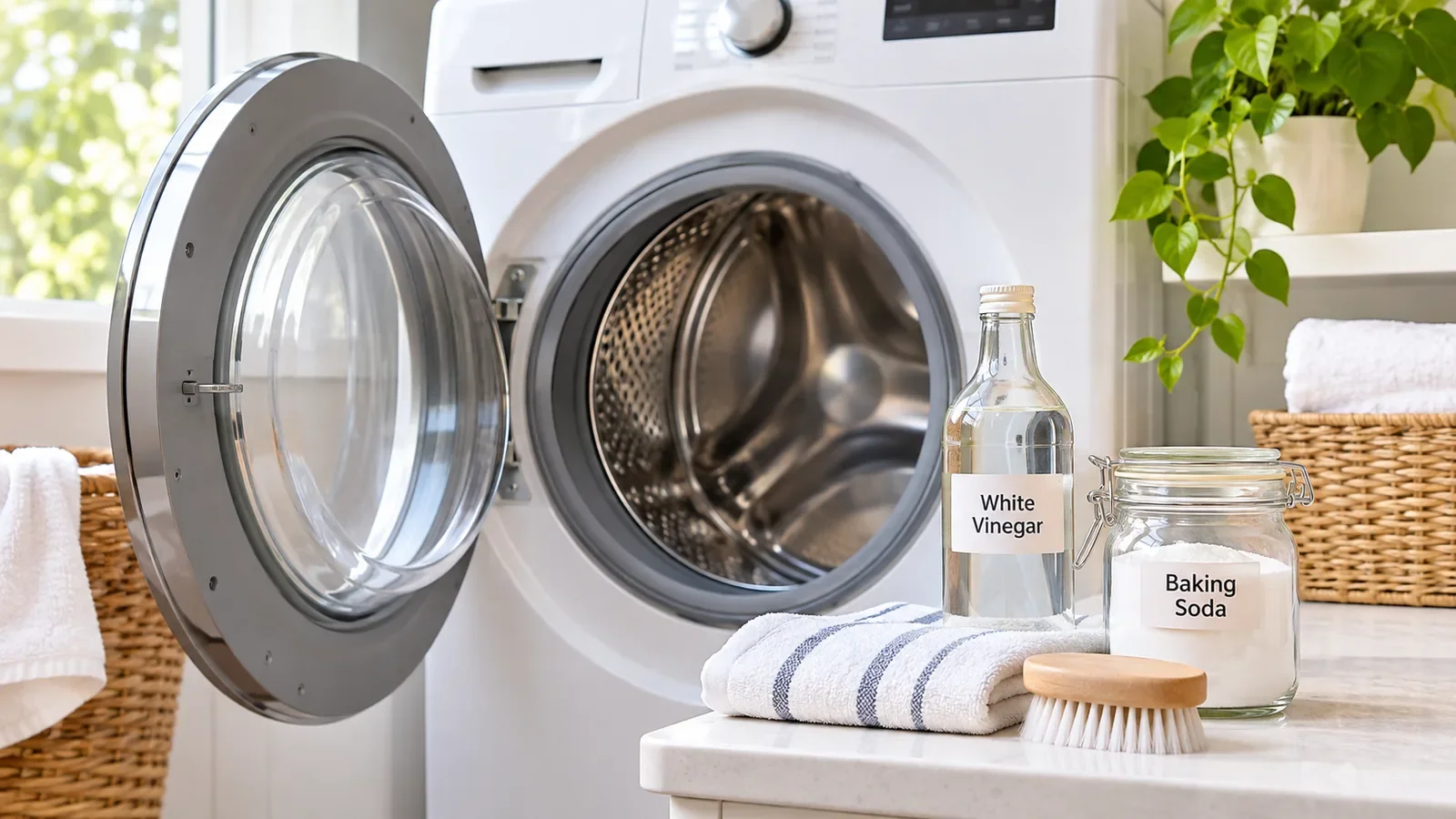
| White vinegar | May help with some mineral deposits, but some washer makers advise against it because of possible effects on parts. Don't use it unless your model's guidance permits it. |
| Baking soda | Not a universal substitute for a washer cleaner. Mixed directly with vinegar, it reacts and reduces the useful action of both. Follow the manual instead of guessing a dose. |
| Citric acid or other DIY powders | Not automatically safe for every washer or seal. Use only when the manufacturer specifically allows the product and method. |
Want a product without perfume? Look for an unscented or fragrance-free option that is also approved for your washer. Fragrance-free doesn't mean it is safe for every sensitivity, so read the ingredient and safety information.
A hot wash also isn't the same as a verified sanitize cycle. Don't assume ordinary hot water will disinfect the washer.
Why does my washing machine still smell after cleaning?
Picture this: you run the cleaning cycle, open the door, and the musty smell is still there. You did what the instructions said. So what's going on?
Sometimes the odor is coming from a spot the cycle didn't clean. Sometimes it's a drainage issue. And sometimes the clothes themselves are holding on to the smell.
| What you notice | What to check next |
|---|---|
| Musty smell near the door | Inspect the gasket folds, door glass, and trapped moisture. |
| Sticky or brown residue | Wipe accessible folds and dispenser areas using approved methods; check for leftover laundry products. |
| Water stays in the drum | Check the manual's filter instructions. Persistent standing water or poor draining needs appliance service. |
| Clothes smell after a wash | Check whether damp laundry sat too long, loads were packed too tightly, detergent was overused, or the fabric itself holds odor. |
| Rotten-egg or sewer-like smell | Stop guessing with cleaners. Plumbing, drain, or supply issues may need professional inspection. |
| Odor returns within days | Check drying habits, dispenser buildup, and drainage. Seek service if the problem persists. |
Don't run endless chemical cycles. If the approved cleaning process and accessible-part cleaning don't help, the next step is diagnosis, not a stronger mix.
What if the clothes still smell?
Try washing a normal-size load with the right amount of detergent and the fabric's recommended cycle. Take clothes out soon after the wash ends. If only certain items smell—like oily work clothes or pet bedding—the odor may be in the fabric rather than the washer.
If you notice an unusual gas-like smell, smoke, sparking, or an electrical burning odor, stop using the machine and seek appropriate urgent professional help.
How often should you clean a washing machine?
For many households, about once a month is a useful reminder to check the washer and run its cleaning cycle if the manufacturer recommends that schedule. Heavy use may call for more frequent care. Your manual takes priority.
A simple washer-care routine
- After each load: Remove damp clothes soon, check for debris, and leave the door or lid open when safe.
- As needed: Wipe the door seal, rim, and detergent spills; dry wet areas.
- About monthly or as directed: Run the approved empty cleaning cycle.
- At the manual's interval: Clean removable dispensers and any user-serviceable filters.
Should you clean the washer after washing dog bedding?
Not always. First, shake or brush loose pet hair off the bedding before it goes in. After washing, check the drum and rim for hair, wipe away debris, and let the machine dry. Follow the manual if a cleaning cycle is needed. Laundry soiled with feces, vomit, or other potentially infectious material may require special handling and hygiene steps.
How do you stop smells from coming back?
Use the right detergent for your machine, including HE detergent where required. Follow the label and washer directions for the amount; more soap doesn't mean cleaner clothes. Don't leave wet laundry sitting in the drum, and let damp parts dry between uses.
The goal isn't to keep your washer spotless every minute. It's to stop small messes from turning into a big job.
Five washing machine cleaning mistakes to avoid
- Mixing cleaning chemicals. Bleach and vinegar can release toxic chlorine gas. Never combine cleaners or add a second one to a cycle without clear instructions.
- Using a viral recipe without checking your model. Large amounts of vinegar, powders, or dishwasher tablets can be unsuitable for your washer.
- Forgetting the rubber seal and dispenser. An empty cycle may leave dirt in these accessible spots.
- Taking the machine apart. Routine care shouldn't mean removing the drum, gasket, or pump housing.
- Ignoring leaks or poor drainage. These may be appliance problems that cleaning alone won't fix.
Frequently asked questions
How can I deep clean my washing machine?
Clean the accessible seal, door or lid, and dispenser first. Then run the empty cleaning cycle with the cleaner your manufacturer approves. Check a user-serviceable filter only as directed. If odors or grime remain, investigate drainage or gasket problems rather than adding stronger chemicals.
Can I put vinegar and baking soda in my washing machine to clean it?
Don't use that mix as your default method. The two react with each other, and some manufacturers advise against vinegar in the washer. Use the cleaner and cycle listed in your manual instead.
How do I clean the inside of my washing machine?
Wipe accessible dirt from the drum, rim, door, or seal. Run the empty manufacturer-approved cleaning cycle. Then dry the areas where water collects.
What dissolves washing machine gunk?
It depends on the buildup. Detergent film, lint, body oils, and mineral deposits are not all the same. Start with gentle wiping and an approved washer cleaner. If residue won't come off, don't use stronger chemicals blindly.
Can I clean a washer without a self-clean setting?
Yes. Look up your model's manual for its recommended empty-cycle method. Water levels and cycle settings vary, so don't assume a long, hot wash is the right choice for every machine.
Do I have to take the washing machine drum apart?
No. Normal homeowner maintenance does not require removing the drum. If you suspect buildup behind the tub or a mechanical problem, ask an appliance professional.
Why does my washer smell like mildew even after a cleaning cycle?
Moisture and residue may still be trapped in the gasket, dispenser, or drain system. Clean the accessible parts, check the filter guidance, and let the machine dry. A persistent smell may need professional diagnosis.
Is bleach better than washing machine cleaner?
Not always. The right product depends on the machine and the problem. Use only the products your manufacturer permits, and never mix bleach with other cleaners.
A cleaner washer, without the guesswork
It's nice to open the washer and smell nothing at all—just a clean, dry machine ready for the next load.
Start with the manual. Wipe the places that trap dirt. Run the right cleaning cycle. And if the smell stays, look for the cause instead of trying another random recipe.
That's a small job you can feel good about crossing off your list.
And if the rest of your home is taking up too much of your free time, you don't have to do every cleaning task yourself. A simpler housework routine can help, and professional home cleaning may take some of that work off your plate.
For Westchester County homeowners, Tres Maids offers recurring house cleaning and deep house cleaning. These are home-cleaning services—not washer repair or a promise of internal appliance servicing. Ask about the scope before booking.
Less Cleaning. More Time for You.
Want help keeping your home clean? See what a house cleaning with Tres Maids could cost.
See My Cleaning PriceNo payment required to see your estimate.
Appliance designs vary. Always follow your washer manufacturer's manual and cleaner labels. Do not mix cleaning products. Tres Maids provides house-cleaning services, not appliance repair. For leaks, drainage faults, damaged seals, or electrical issues, contact a qualified professional.