
Bathroom Cleaning Guide · Tres Maids
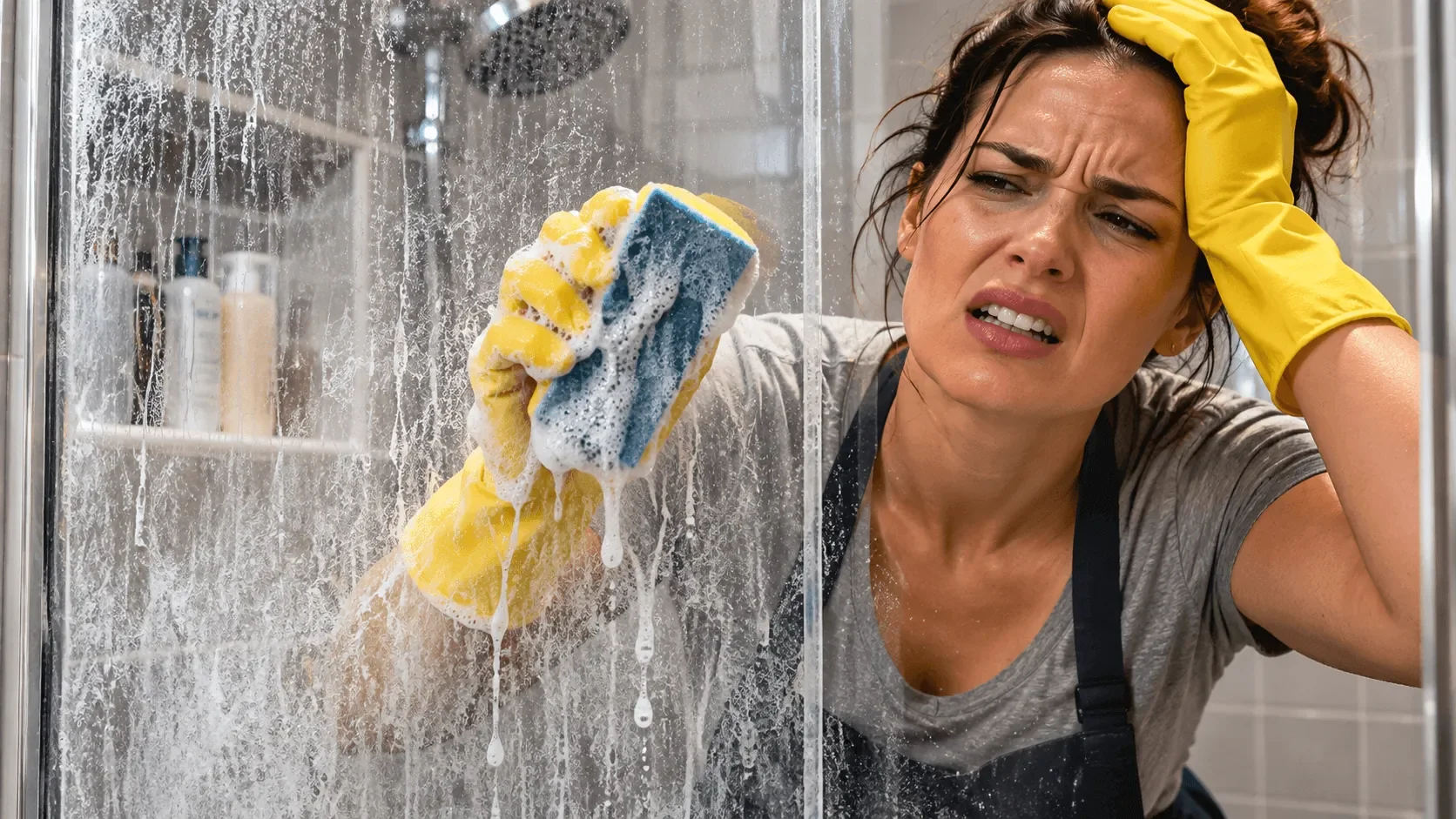
You sprayed the shower. You scrubbed the walls. You rinsed everything off.
So why is that cloudy, rough film still there?
Maybe you've tried three cleaners already. Maybe your glass door still looks foggy. Or maybe you're tired of spending part of your weekend on your knees, scrubbing the tub.
Here's the good news: you may not need to scrub harder. You may need to figure out what's actually on your shower first.
Quick answer: To remove soap scum, first check what your shower is made of. Use a nonabrasive bathroom cleaner labeled safe for that surface and for soap scum. Follow the label's contact time, wipe gently with a soft sponge or microfiber cloth, then rinse well and dry. If a white, chalky film remains, hard-water minerals may also be present. Use a compatible mineral-deposit remover only if the surface and product instructions allow it.
Why is soap scum so hard to remove?
Soap scum is the stubborn film that can form when soap reacts with minerals in your water. Body oils and other shower products can add to the mess.
Over time, that film can build up on your shower walls, tub, and glass door. It may feel rough or look cloudy.
And here's what makes it tricky: not every cloudy shower has the same kind of buildup.
That's why a cleaner that works great in one bathroom might do very little in another.
Is it soap scum or hard-water buildup?
Before you reach for another bottle, look at what you're trying to remove. These clues can help, though you can't always tell by appearance alone.
Soap and product film
Often looks cloudy or feels waxy or slippery. It may collect where soap and body products hit the shower.
Hard-water deposits
Often look white, chalky, or crusty. They may appear around faucets, on glass, and where water dries.
Sometimes you have both at once. And sometimes a dull or cloudy surface has been scratched or etched. No cleaning product can promise to reverse permanent damage.
Not sure what your shower is made of? Find out before using an acidic cleaner or scrub. Natural stone, some metal finishes, and certain coated surfaces can be damaged by the wrong product.
What you'll need
Start with the basics
- Microfiber cloths or a soft, non-scratch sponge
- A bathroom cleaner labeled for soap scum and your shower surface
- Clean water for rinsing
- Gloves, if the product label calls for them
- A clean, dry towel or squeegee
You don't need to buy five new products. Start with one cleaner that matches the job and the material.
If you later need a mineral-deposit remover, choose one that specifically says it is safe for your shower surface. Never combine it with the first cleaner.
How to remove soap scum from your shower, step by step
Step 1: Check the surface and the label
Is your shower glass, ceramic tile, acrylic, fiberglass, or natural stone? Read the cleaner's label to make sure it's suitable. If you're unsure, check the shower manufacturer's care instructions first.
Step 2: Test a small hidden spot
Try the product in an out-of-the-way area, as directed. Look for changes to the finish, color, or coating before cleaning a large section.
Step 3: Apply the cleaner as directed
Follow the product's instructions for how to apply it and whether the surface should be wet or dry. Open a window or use ventilation as the label directs.
Step 4: Give it the right amount of time
Don't wipe it away too soon if the label calls for contact time. But don't leave it on for hours or overnight unless the manufacturer specifically says that's safe.
Step 5: Wipe gently, then rinse
Use a soft sponge or microfiber cloth. Avoid pressing hard or reaching for rough pads. Rinse thoroughly according to the label.
Step 6: Dry and check the result
Dry the area with a clean towel or squeegee. If it still looks chalky, you may be dealing with mineral buildup rather than just soap residue.
The goal is to let the right product do its job—not wear yourself out scrubbing.
How to clean soap scum on different shower surfaces
One cleaning method does not fit every shower. Use this as a starting point, then follow the care instructions for your specific material.
| Surface | Safer starting point | Watch out for |
|---|---|---|
| Glass doors | Nonabrasive cleaner approved for your glass and any protective coating | Steel wool, blades, abrasive powders, and incompatible acids |
| Ceramic or porcelain tile | Surface-safe bathroom cleaner and soft cloth | Grout, sealers, and decorative finishes that may need different care |
| Acrylic or fiberglass | Cleaner approved for plastic tubs and surrounds; soft sponge | Abrasive pads, powders, and harsh solvents that may dull or scratch |
| Natural stone | Stone-safe, pH-neutral cleaner recommended for that stone | Vinegar and acidic descalers, which can etch some stone |
| Metal fixtures | Cleaner approved for the exact finish; gentle wiping | Strong chemicals and abrasives that may damage plating or coatings |
If your shower has more than one material, such as glass next to marble tile, protect the most sensitive surface. Don't let a cleaner meant for glass run onto stone or fixtures.
What if the soap scum still won't come off?
Imagine it's Saturday. You've already cleaned the rest of the bathroom. But the shower door still looks cloudy, and you're wondering whether to scrub it one more time.
Before you do, try to work out why it's still there.
| What you're seeing | What to check next |
|---|---|
| Greasy or waxy film remains | Was the cleaner designed for soap and body-product residue? Was it used for the labeled contact time? |
| White, chalky spots remain | Hard-water minerals may be involved. Check whether a surface-safe mineral remover is appropriate. |
| Glass stays cloudy after cleaning | It could be remaining deposits, a damaged coating, or etched glass. More scrubbing may make things worse. |
| Plastic tub feels rough or looks dull | Look for possible wear or abrasion. Avoid aggressive scrubbing until you know the condition of the finish. |
| Buildup returns quickly | Look at water hardness, leftover product, and how often surfaces are rinsed and dried. |
If you are unsure whether this needs a bigger clean or just regular upkeep, our guide to regular cleaning vs. deep cleaning can help you decide.
For thick deposits, you may need more than one careful cleaning session. Follow each product's directions, rinse fully, and stop if the surface begins to change or the cleaner doesn't seem suitable.
And if nothing changes? Don't keep escalating to stronger chemicals. Some marks are surface damage, not dirt. A glass or surface-restoration specialist may be better suited to assess them.
5 cleaning mistakes that can make things worse
- Mixing cleaning products. Never mix bleach with acids, ammonia, or other cleaners. Dangerous gases can form. Use one product at a time, following its label.
- Using vinegar on every surface. Vinegar can damage natural stone and certain finishes. Check compatibility first.
- Leaving cleaners on too long. More time isn't always more cleaning power. Follow the labeled contact time.
- Scrubbing with anything abrasive. Steel wool, razor blades, rough pads, and powders may scratch glass coatings, acrylic, and other finishes.
- Assuming every white mark is soap scum. Mineral deposits and permanent surface damage can look similar at first.
Also skip oven cleaner, paint solvents, and other products not labeled for your shower surface. And don't pour boiling water onto a tub or glass door; burns and material damage aren't worth the risk.
How to keep soap scum from coming back
You finally get the shower looking better. The last thing you want is to do the same big scrub next weekend.
A small routine can make the next clean easier.
A simple after-shower routine
- Rinse soap and shampoo residue from the walls and door.
- Use a squeegee on suitable glass and smooth surfaces.
- Dry spots where water tends to sit.
- Run the bathroom fan or ventilate to help surfaces dry.
- Clean regularly with a product made for your shower material.
Switching from some bar soaps to liquid body wash may reduce certain types of soap scum, but it won't stop all buildup. Hard-water spots and other residue can still form.
The real win isn't a shower that never gets dirty. It's a shower that's easier to keep clean.
When is it worth getting help with bathroom cleaning?
Maybe you can clean the shower yourself. But after a full workweek, the last thing you want to do is spend your day off scrubbing tile and glass. If you are weighing the time against the cost, see whether a house cleaning service is worth it.
That's where professional house cleaning can help. A cleaner can take routine bathroom work off your plate, so you have more time for your family, your plans, or simply a quiet Saturday.
There are limits, too. Professional cleaning can't guarantee the removal of every stain or reverse permanent etching, scratches, or damaged finishes. Heavy buildup may need extra time or a specialist.
If you're in Westchester County, Tres Maids offers deep cleaning, one-time house cleaning, and recurring house cleaning. You can also read what a deep cleaning includes before deciding what you need.
More Free Time. A Cleaner Home.
First-time cleaning starts at $99 for qualifying homes. See your personalized cleaning price.
See My PriceNo card required · Offer eligibility varies by home.
Frequently asked questions
What removes really thick soap scum?
Start with a cleaner labeled for heavy soap-scum buildup and safe for your shower material. Follow its instructions and contact time. Thick layers may need more than one careful pass. If a chalky layer remains, mineral deposits may also be present.
Why won't soap scum come off my shower door?
It may be mixed with hard-water deposits, or the glass or its coating may be damaged. If the right surface-safe cleaner doesn't change the appearance, avoid more aggressive scrubbing and consider having the glass assessed.
Does vinegar remove soap scum?
Vinegar may help with some mineral-based deposits on acid-safe surfaces. But it isn't right for every shower. Don't use it on natural stone or any finish whose manufacturer advises against acids, and never mix it with bleach or other cleaners.
Does dish soap remove soap scum?
Dish soap can help loosen oily residue on some compatible surfaces, but it may not remove mineral deposits. Rinse well so you don't leave more film behind. Follow the surface manufacturer's cleaning guidance.
How long should I let shower cleaner sit?
Only as long as the product label recommends for that surface and use. Don't assume that leaving a cleaner on overnight is safe or more effective.
Can soap scum permanently damage glass?
Cloudiness can sometimes come from deposits, but etching or damage to a glass coating can also affect how it looks. Cleaning may remove residue, but it won't reliably repair permanent damage.
How do I prevent soap scum without cleaning every day?
Rinse off product residue, squeegee or dry suitable surfaces after showers, and keep up with regular cleaning. Small habits can reduce buildup, though they won't eliminate it completely.
A cleaner shower shouldn't take your whole Saturday
You don't need to keep buying stronger products or scrubbing harder. Start by checking the buildup, the surface, and the cleaner you're using. A safer, more targeted approach can save effort and help protect your shower.
And if you'd rather spend your free time doing something other than cleaning the bathroom, that's a choice you can make, too.
More Free Time. A Cleaner Home.
First-time cleaning starts at $99 for qualifying homes. See your personalized cleaning price.
See My PriceNo card required · Offer eligibility varies by home.
Cleaning guidance is general. Always follow product labels and your surface manufacturer's instructions. Do not mix cleaning chemicals. If a surface is damaged or its material is uncertain, seek qualified advice before trying stronger treatments.