
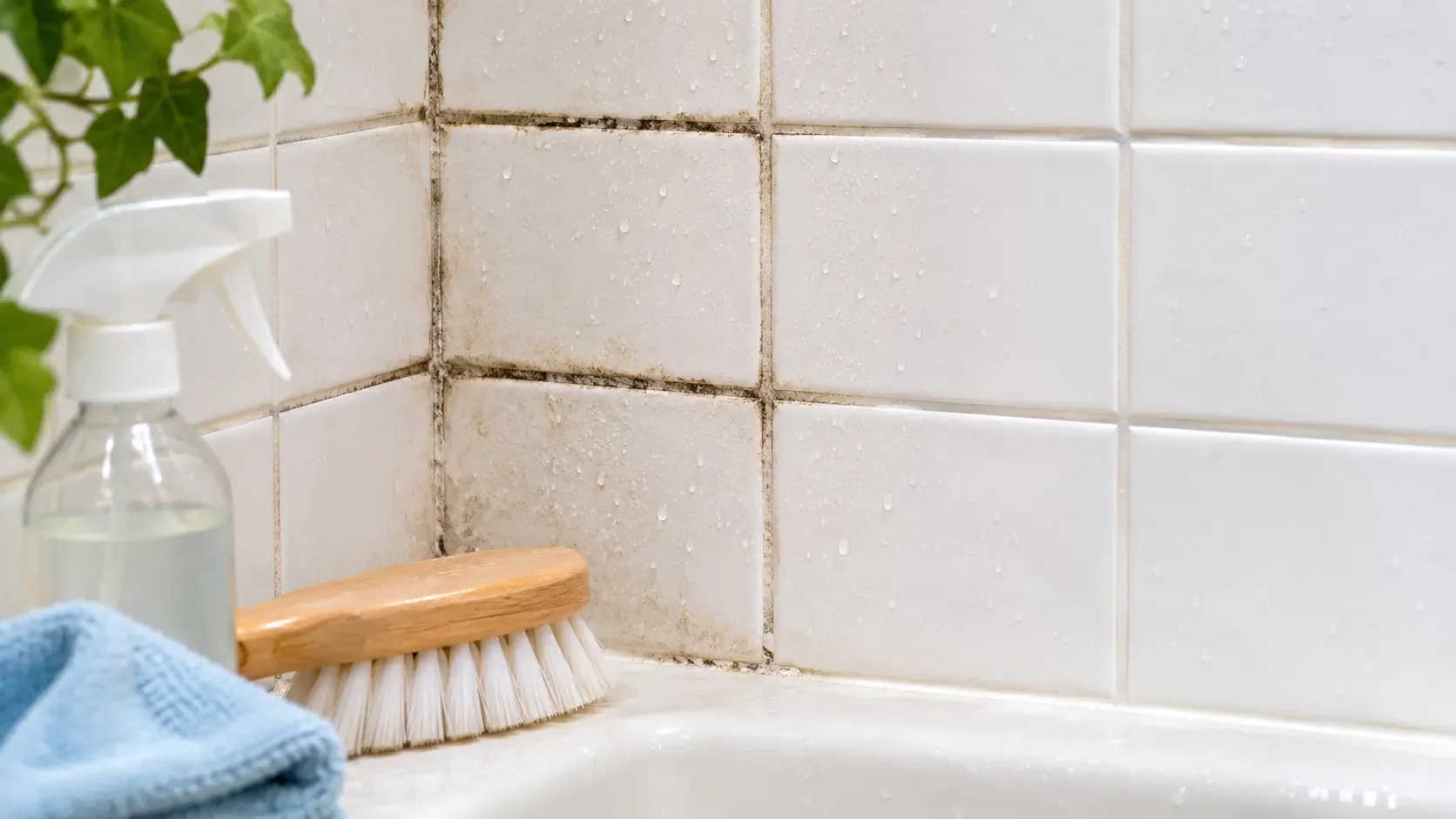
You scrub your bathroom grout. You rinse it. For a moment, it looks clean.
Then it dries. And those dark lines are still there.
Or maybe the grout looks great today, only for pink or gray buildup to show up again next week. It's enough to make you want to put the brush away for good.
Before you scrub harder or reach for a stronger cleaner, try a better plan. The right way to clean bathroom grout depends on what's making it dirty—and what your grout and tile are made of.
Quick answer: How to clean bathroom grout
- Check what kind of tile and grout you have. Test your cleaner in a hidden spot.
- Remove loose hair and dirt. Wet the grout lightly with warm water.
- Use a little mild dish soap in warm water, or a cleaner approved for your tile and grout.
- Scrub gently with a soft nylon grout brush.
- Rinse well with clean water, then dry the area.
- Check the grout once it's fully dry. If stains remain, identify the cause before trying another product.
What You'll Need to Clean Bathroom Grout
You don't need a cabinet full of products to start. In fact, it's best to begin with a gentle method.
- Warm water
- A small amount of mild dish soap or a surface-approved, pH-neutral tile cleaner
- A soft nylon grout brush or an old, soft toothbrush
- Clean cloths or a sponge
- A dry towel
- Gloves, if your cleaner's label calls for them
First, check your surface. Ceramic and porcelain tile, natural stone, cement-based grout, epoxy grout, and silicone caulk do not all need the same care. If you're unsure what you have, check the maker's instructions or ask a tile professional before using a strong cleaner.
How to Clean Bathroom Grout, Step by Step
Start here for everyday dirt and light buildup. This is a gentle first pass, not a promise that every old stain will disappear.
- Clear the area.
Move bottles and bath mats out of the way. Sweep or vacuum loose dirt from floor tile. In the shower, rinse away loose hair and debris.
- Test your cleaner.
Try it on a small, hidden spot. Follow the product label and your tile maker's care advice. Don't use a product if it changes the color or finish.
- Wash a small section.
Use warm water with a little mild dish soap, or a cleaner made for your surface. Work on a few grout lines at a time so you can rinse before residue dries.
- Brush gently.
Use a soft nylon brush along the grout lines. You want to lift dirt, not scrape away the grout. If it starts to crumble, stop.
- Rinse well.
Wipe or rinse with clean water until the soap and loosened dirt are gone. A dirty sponge can put grime right back on the floor.
- Dry and check.
Use a towel to remove extra water. Let the grout dry fully before judging the result. Wet grout can look darker or more even than dry grout.
Have soap scum on the tile too? Our guide to removing stubborn shower soap scum can help you tackle that separate problem.
What If Your Bathroom Grout Still Looks Dirty?
Here's the part that can drive you crazy: you've cleaned the grout, but the stain barely moved.
That doesn't always mean you need more force. It may mean you're treating the wrong kind of buildup.
Grout looks clean when wet, but dirty when dry
Water can change how grout looks. Once it dries, old stains, worn color, or leftover residue may stand out again.
Try one careful rinse with clean water, let the area dry, and compare it with a less-used grout line. If the color still looks uneven, more scrubbing may not be the answer.
Brown or gray grout that won't brighten
This may be ground-in dirt, old staining, or simply the grout's original color. Test a grout cleaner that is specifically approved for your tile and grout. Follow its directions exactly.
If it doesn't help, stop before trying harsher chemicals. A tile-and-grout specialist can tell you whether deeper cleaning, color restoration, or repair is more likely to work.
Orange, white, or crusty marks
Hard water can leave mineral buildup. Rust can leave orange marks. These need different care from everyday dirt.
Don't assume vinegar or another acid is safe. Acid can damage natural stone and some cement-based grout. Choose a product approved for the surface and the type of stain.
Why Does Pink or Dark Shower Buildup Keep Coming Back?
Maybe you've cleaned the shower twice this month. Yet the pink film is back around the corners and grout lines.
Pink buildup in damp bathrooms can be linked to bacteria, including Serratia marcescens. But color alone can't tell you exactly what it is. Dark spots may be mildew, mold, or another stain.
Moisture and leftover soap residue can help buildup return. Cleaning the surface matters, but so does keeping it dry.
- Run your bathroom fan during showers and afterward, following its guidance.
- Use a squeegee or towel to remove water from shower walls.
- Fix leaks and areas that stay wet.
- Clean soap residue before it builds up.
- Wash or replace damp shower items as needed.
Important: If you see widespread growth, smell a lasting musty odor, or notice water damage behind tile, cleaning alone may not solve it. Find and fix the moisture problem. Larger or recurring mold problems may need qualified professional assessment.
What Should You Avoid When Cleaning Grout?
When a stain won't move, it's tempting to try every trick you see online. But some can leave you with damaged grout—or dangerous fumes.
- Don't mix cleaning products. Never combine bleach with vinegar, ammonia, acids, or other cleaners. Use one product at a time and follow its label.
- Don't use toilet bowl cleaner on grout. It may contain strong acids or other ingredients not meant for tile surfaces.
- Don't use vinegar on natural stone or acid-sensitive grout. It can dull or etch surfaces.
- Don't scrub with wire brushes or sandpaper. They can wear away grout and scratch tile.
- Don't leave strong cleaners on overnight unless the label specifically allows it. Longer contact isn't always safer or better.
- Don't assume steam is safe everywhere. Heat and moisture may be unsuitable for loose tile, damaged grout, some sealers, or certain surfaces. Check the maker's instructions first.
Use good ventilation and any protective gear listed on the product. If a cleaner causes irritation or strong fumes, stop using it and move to fresh air.
How to Keep Bathroom Grout Cleaner for Longer
Picture a different Saturday. You walk into the bathroom, and the grout doesn't need another long scrub.
That's the goal: less buildup, fewer big cleaning jobs, and more time for the rest of your day.
Do a little upkeep before dirt builds up
Wipe up standing water. Keep the fan working. Clean shower walls and bathroom floors on a regular schedule that fits how often they're used.
On tile floors, remove loose dirt before mopping. Otherwise, dirty water can settle into the grout lines.
Ask whether your grout needs sealing
Some cement-based grout benefits from a compatible sealer. Other grout types may not need it. Sealer can help resist stains, but it won't stop all dirt or replace cleaning.
Check your grout and sealer instructions. Clean and dry the surface as directed before sealing. If you can't get the grout clean enough, ask a tile professional rather than sealing over a problem.
Make routine cleaning easier to keep up with
A few minutes of care can help you avoid another long weekend job. If your whole home is hard to keep up with, a recurring house cleaning service in Westchester may help with regular upkeep.
Routine house cleaning is not the same as grout restoration. Ask what's included before you book.
When Is Grout Too Damaged to Clean?
Sometimes the problem isn't dirt at all.
If grout is cracked, missing, loose, or crumbling, scrubbing won't repair it. If dark marks are trapped in old silicone caulk, cleaning may not remove them fully either.
And if water is getting behind the tile, the real fix may involve repair—not another bottle of cleaner.
That's when it makes sense to call a tile or grout repair specialist. You may need a repair, new caulk, or professional restoration instead of more cleaning.
Moving into a home that needs a fresh start? A move-in cleaning service can help with general home cleaning, while specialist grout repairs should be handled separately.
What If You Just Don't Have Time to Keep Up?
You get through a long week. Then you look at the shower, the floors, and the rest of the house.
It's not just one grout line. It's one more thing on a long list.
There is nothing wrong with doing the cleaning yourself. And there is nothing wrong with wanting some of that time back.
If your home needs a bigger reset, you can learn about deep cleaning in Westchester County and what a deep cleaning usually includes. For help with everyday upkeep, you can also compare regular cleaning and deep cleaning.
Just be sure to ask whether the exact grout work you need is included. Deep house cleaning does not automatically mean tile restoration, mold removal, or regrouting.
Bathroom Grout Cleaning FAQs
What is the best thing to clean bathroom grout with?
For light dirt, start with warm water, a little mild dish soap, and a soft nylon brush. For harder stains, choose a grout cleaner approved for your tile and grout type. No single product is best for every surface.
Can I use baking soda and hydrogen peroxide on grout?
Some people use them on certain grout surfaces, but they aren't safe for every tile, finish, or grout type. They may affect color or nearby materials. Check manufacturer guidance and test any approved method in a hidden spot. Don't combine them with other cleaners.
Does vinegar clean grout?
Vinegar can remove some mineral deposits, but it is acidic. It may damage natural stone and cement-based grout. It's not a good all-purpose grout cleaner.
Why does my grout turn dark again after cleaning?
It may still hold dirt or residue. Water can also make grout look different until it dries. If the color won't improve after a safe cleaning and rinse, the grout may be stained, worn, or in need of professional assessment.
How often should I clean bathroom grout?
It depends on how often you use the bathroom and how damp it stays. Wipe away water and soap residue often, and clean the grout before buildup gets heavy. There is no single schedule that works for every home.
Can a house cleaning service make old grout look new?
A cleaning service may help remove ordinary surface dirt, depending on its scope. But deep staining, failed caulk, broken grout, and moisture damage can require a tile or grout specialist. Ask about the service's exact tasks before booking.
Clean Grout Starts With the Right Plan
You don't have to scrub harder just because the first cleaner didn't work.
Start gently. Find out what kind of stain you're dealing with. Use products that fit your tile and grout. Then keep moisture and buildup under control.
And if the bathroom is just one of many chores you wish you could cross off your list, you have options.
More Free Time. Less Housework.
Tres Maids helps Westchester County homeowners with house cleaning, so they can spend less time catching up on chores. See what cleaning your home could cost.
See My Cleaning PriceNo payment required to see your estimate. Ask about specific bathroom and grout tasks before booking.