
You scrub the toilet. Mop the floor. Wipe the sink. The bathroom looks clean.
But when you walk back in, you smell pee. Again.
It's frustrating, especially when you've already spent time cleaning. The good news? You may not need to clean the whole bathroom again. You may just need to find the one spot you missed.
Quick answer: How to get rid of urine smell in a bathroom
- Check the toilet seat hinges and mounting bolts first. Old urine can collect in tight spaces.
- Clean around and behind the toilet. Include the bowl's outside, floor, grout, nearby wall, and baseboards.
- Use a cleaner made for the surface. For urine residue, consider a product labeled for urine odor. Follow its directions.
- Wash or remove smelly fabrics. Check bath mats, towels, and shower curtains.
- Let everything dry, then check again. If the smell stays or you notice a leak or sewer odor, the problem may need a plumber.
Start with the seat hinges. They're easy to miss, and you can inspect them before buying anything new.
Find the source in 30 seconds
Use this guide to decide where to check first. These are clues, not a sure diagnosis.
| What you notice | Check here first | Your next move |
|---|---|---|
| Smell near the seat | Hinges, bolt covers, underside | Inspect and clean accessible parts as the maker directs. |
| Smell near the floor | Tile, grout, baseboards, toilet exterior | Remove residue with a surface-safe cleaner. |
| Smell returns after use | Fresh splash zones, missed seams | Check when it returns; wipe splash areas promptly. |
| Smell after mopping | Mop head, bucket, damp floor | Use clean tools and water; dry the area. |
| Sewer-like odor or a wet, loose toilet | Drains, toilet seal, plumbing | Stop repeated chemical cleaning; contact a plumber. |
Why Does Your Bathroom Still Smell Like Urine After Cleaning?
Because the spot that smells may not be the spot you've been cleaning.
Think about the toilet seat. You can wipe the top until it shines. But if old urine is trapped near a hinge or under a bolt cover, wiping the top won't reach it.
The same goes for the floor. You might mop the middle of the room while missing the grout line right beside the toilet.
Why old urine can smell so strong
Fresh urine often has only a mild smell. Over time, some bacteria can break down a substance in urine called urea. This can release ammonia, which has a sharp smell.
That helps explain why an old, hidden spot may smell much worse than a fresh splash. A published study indexed by the National Library of Medicine found that bacterial activity played an important role in ammonia odor from urine in diapers. Bathroom surfaces aren't the same as diapers, but the chemistry helps explain why removing old residue matters.
One key point: A product that kills germs does not always remove the dirt or residue causing a smell. The EPA explains the difference between cleaning and disinfecting.
9 Places Urine Smell Can Hide in a Bathroom
Before you scrub again, use your nose and your eyes to narrow down the source. You don't need to put your face close to dirty areas. Just notice where the odor seems strongest as you move around the room.
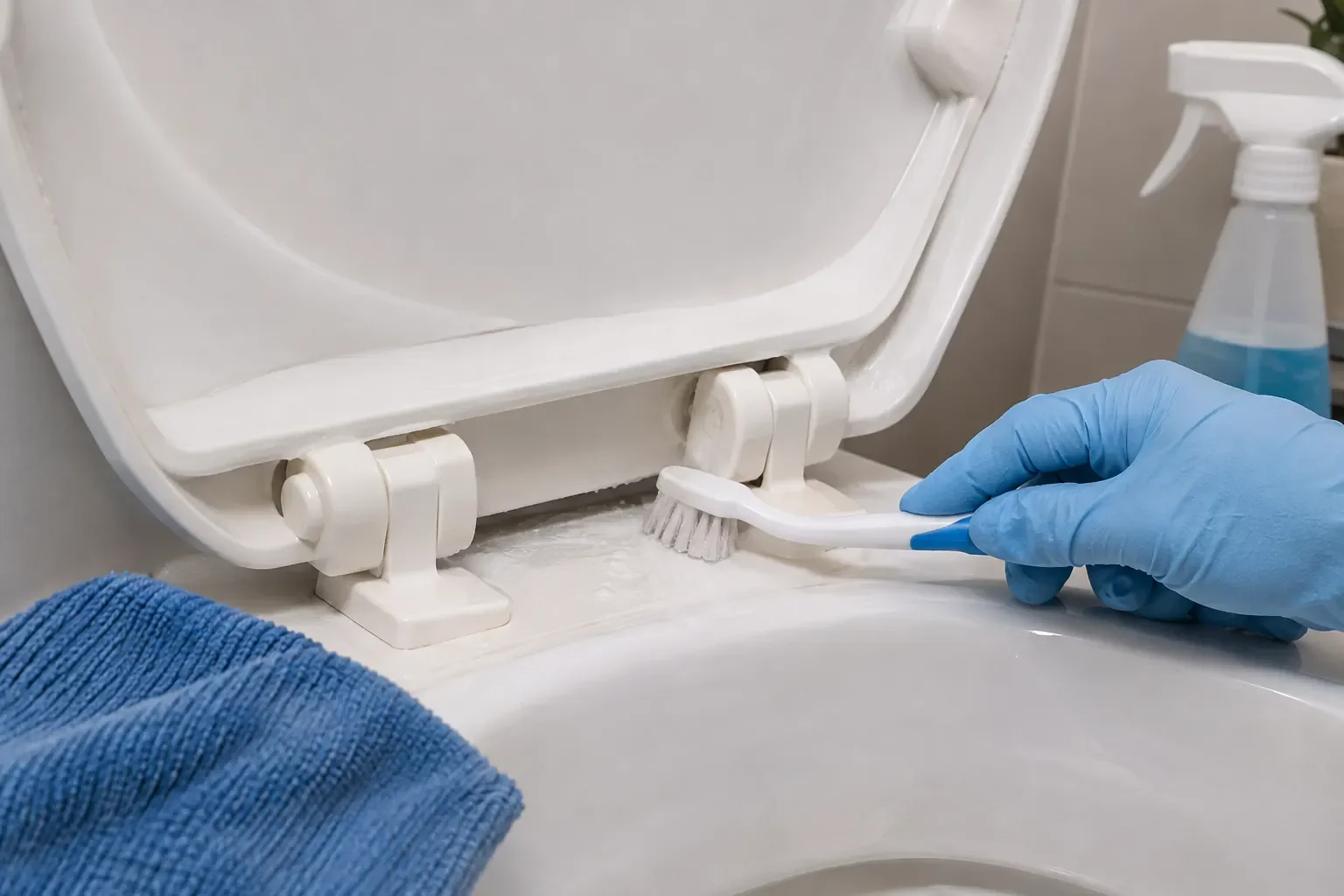
1. Toilet seat hinges
Hinges have seams that are hard to reach with a cloth. Some toilet seats lift off with a quick-release button. Others have bolts under covers.
Check your seat's instructions before taking it apart. Look for buildup where the seat joins the bowl. This is one of the first places worth checking when the toilet looks clean but still smells.
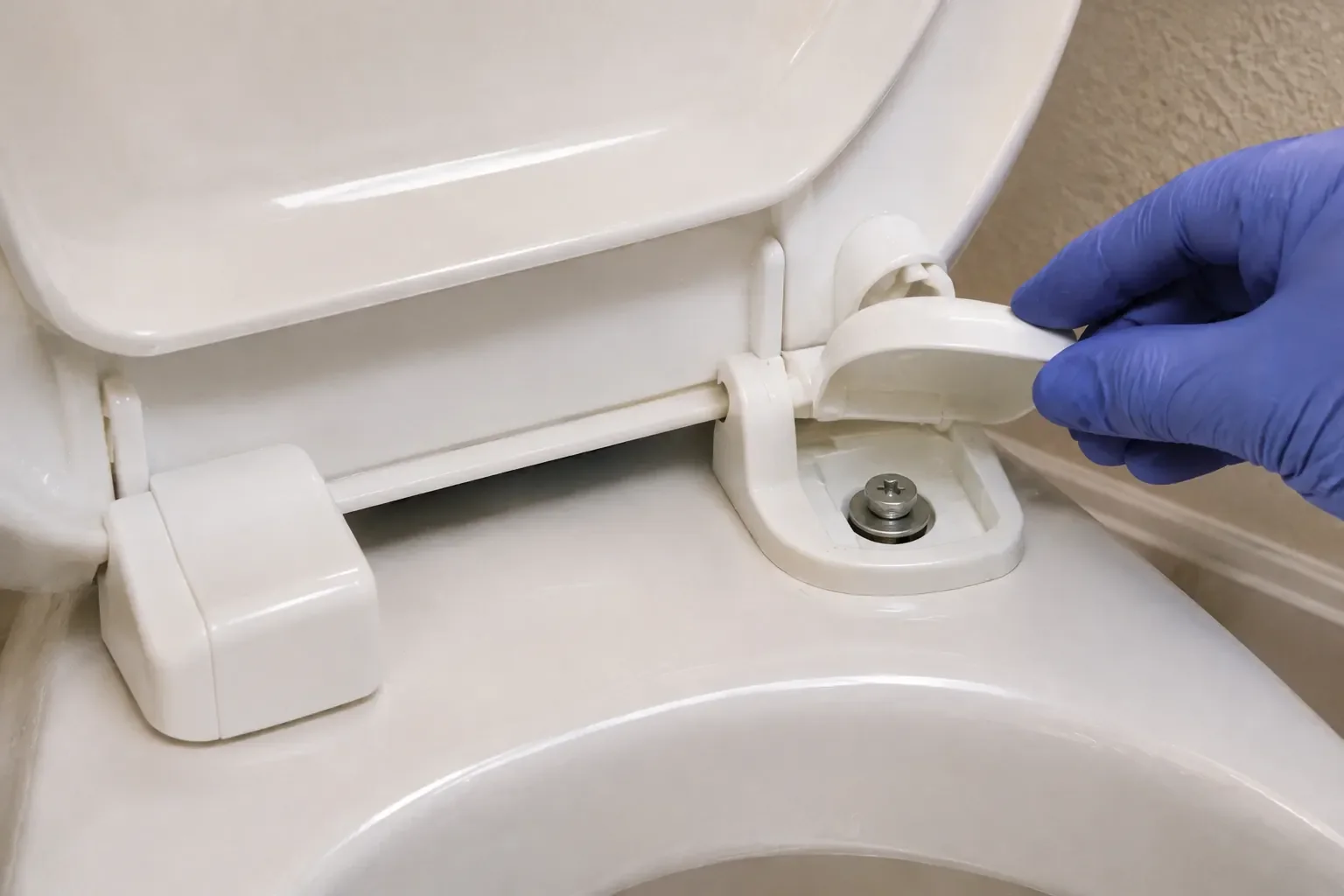
2. Seat bolts and bolt covers
Small gaps around the mounting holes can hold residue. If your seat can be removed safely, clean the exposed area and the hardware as directed by the maker. Don't force stuck or damaged parts.
3. The underside and outside of the toilet
Look under the seat, around the outer rim, down the sides of the bowl, and behind the toilet. These spots may get missed when you focus on the bowl's inside.
4. The floor right beside the toilet
A few splashes can land on the floor without leaving an obvious mark. Check the area at the front and sides of the toilet, then the harder-to-reach space behind it.
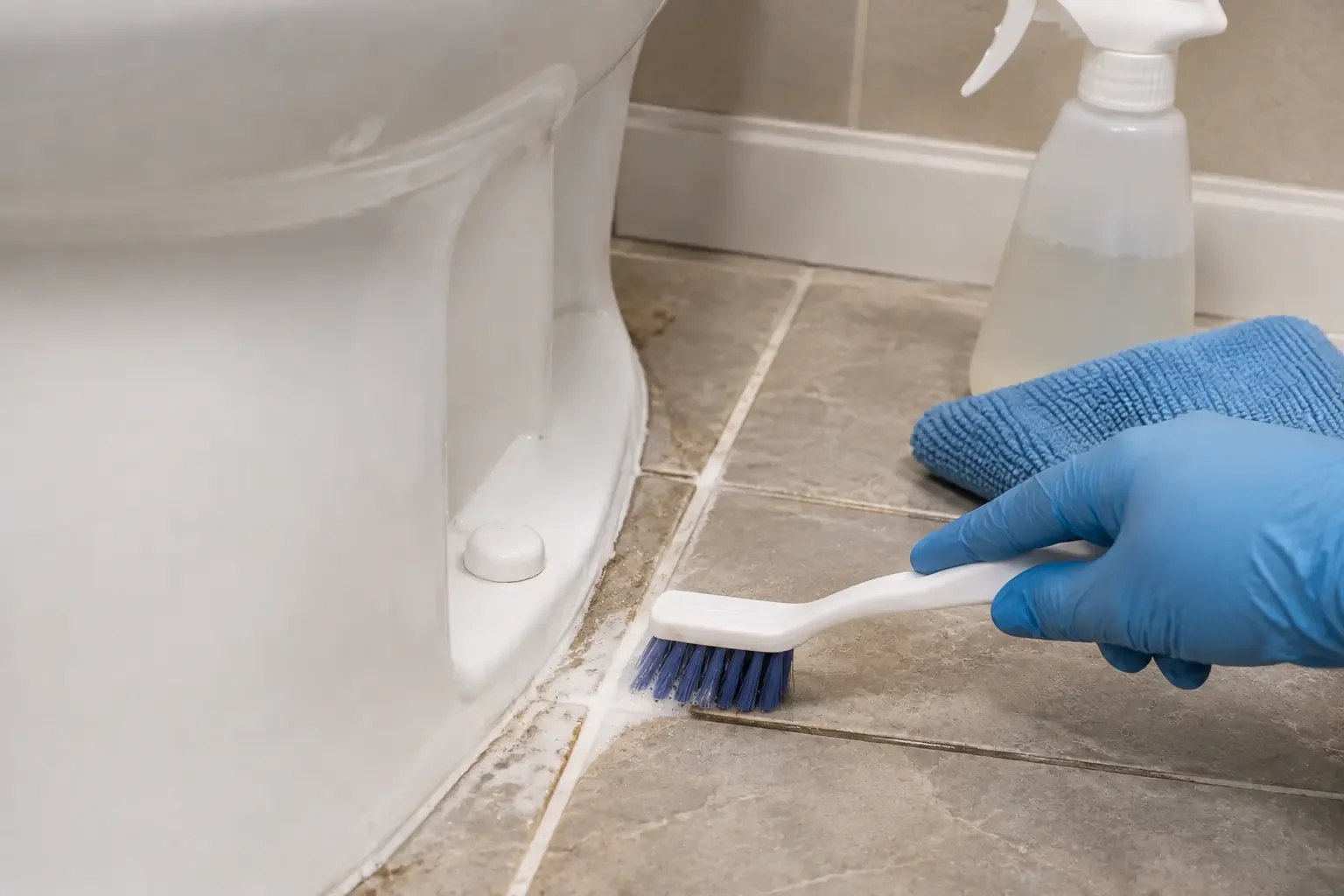
5. Tile grout
Grout has a rougher surface than glazed tile. If its seal has worn away, it may hold moisture and residue more easily. A quick pass with a mop may not be enough.
For more help with grout care, see our guide to cleaning bathroom grout.
6. Caulk and the toilet base
Check the caulk and floor edge near the toilet. If caulk is cracked or stained, it may be hard to clean fully. But don't seal over a wet or leaking area. First make sure there isn't a plumbing problem.
7. Nearby walls and baseboards
Splash marks can reach the wall beside or behind a toilet. They may be hard to see, especially on textured paint.
Use a lightly damp cloth and a mild cleaner approved for painted surfaces. Test a small hidden spot. Don't soak drywall, painted trim, or wood.
8. Bath mats, towels, and shower curtains
Fabric can hold odor even when the floor underneath looks clean. Move washable items out of the room. Smell-check them separately and wash them as their care labels allow.
9. The toilet brush, holder, mop, or bucket
Sometimes the smell isn't coming from the bathroom surface at all. A dirty brush holder or mop head can keep spreading a bad smell after you've cleaned. Wash and dry reusable tools as directed, or replace worn tools that cannot be cleaned well.
How to Remove Urine Smell From a Bathroom: Step by Step
Here's a plan you can follow without turning your whole day into a cleaning project.
Step 1: Open a window or turn on the fan
Put on gloves. Keep children and pets away from the work area. Read the label on every cleaner before you start.
Important safety rule: Never mix bleach with ammonia, vinegar, toilet bowl cleaner, or other cleaning products. The CDC warns against mixing bleach with other cleaners. If you've used one product, follow its rinsing and ventilation directions before using anything else.
Step 2: Take a slow look around the toilet
Check the seat hinges, bolt covers, outside of the bowl, nearby floor, grout, and wall. Look for stains, damp areas, or trapped grime.
Don't assume a glow under a UV flashlight proves something is urine. Many other materials can glow, too. A light may help you spot areas to inspect, but it isn't a sure test.
Step 3: Remove the seat if the maker says it's safe
If the seat has a quick-release feature, follow its instructions. Otherwise, check the maker's guide before loosening bolts.
Clean the exposed mounting area with a surface-safe product and a cloth or soft brush. Keep water away from electronic or heated seat parts. Don't soak hinges or hardware.
Kohler's toilet-seat care guidance says painted wood seats need mild detergent, and the hinge area should dry fully after cleaning. Different seats need different care.
Step 4: Clean the toilet's outside and the nearby floor
Start with visible dirt and residue. Wipe the outside of the bowl, around the base, and the floor beside it. Use separate cloths for the toilet and other bathroom surfaces.
For a stubborn urine smell, choose a product whose label says it treats urine odor and is safe for your surface. Follow the stated amount, time, wiping, and drying steps.
For example, Clorox gives a three-minute application step for its Urine Remover Spray in one of its cleaning guides, followed by blotting and air-drying. That's an example for that product and use—not a rule for every urine cleaner. Always follow the bottle you have.
Step 5: Wash the fabrics and check your tools
Wash bath mats and other washable items using their care labels. Clean the toilet brush holder and any reusable cleaning tools that smell. Let them dry before putting them back.
Step 6: Let the room dry, then check the smell
Leave the fan running if you can. Once surfaces are dry and cleaning-product scents have faded, go back and check.
Did the smell go away? Is it weaker? Or is it just as strong? Your answer tells you what to do next.
What Should You Use on Tile, Grout, Walls, and Other Surfaces?
The best cleaner depends on what the urine touched. A product that works on tile may harm painted wood or natural stone.
| Surface | Safer starting point | What to avoid |
|---|---|---|
| Glazed tile | Clean residue with a compatible bathroom cleaner, then rinse or wipe as the label says. | Harsh abrasives that can scratch the finish. |
| Grout | Use a grout-safe cleaner and soft brush. Test first. | Soaking damaged grout or using strong chemicals without checking compatibility. |
| Painted walls | Lightly damp microfiber cloth with mild, paint-safe cleaner. | Scrubbing hard or soaking paint and drywall. |
| Painted wood seat or trim | Mild detergent and a damp cloth, if allowed by the maker. | Harsh toilet cleaners, heavy soaking, or abrasives. |
| Natural stone | Stone-approved, often pH-neutral cleaner. | Vinegar and other acidic cleaners unless the stone maker permits them. |
| Bath mats and fabric | Launder as the care label allows; dry fully. | Using a hard-surface cleaner on fabric without label approval. |
Do enzyme cleaners work on human urine?
Some products made for urine odor use enzymes or other ingredients to help break down odor-causing material. But not every bottle labeled “odor remover” is an enzyme cleaner.
Check the label for human urine use, surface safety, and how long the product needs to stay in place. Some products need more time than others. Using more than the label says doesn't always work better.
If urine has soaked deep into damaged flooring or a wall, a surface cleaner may not reach it. That may call for repair, not another spray.
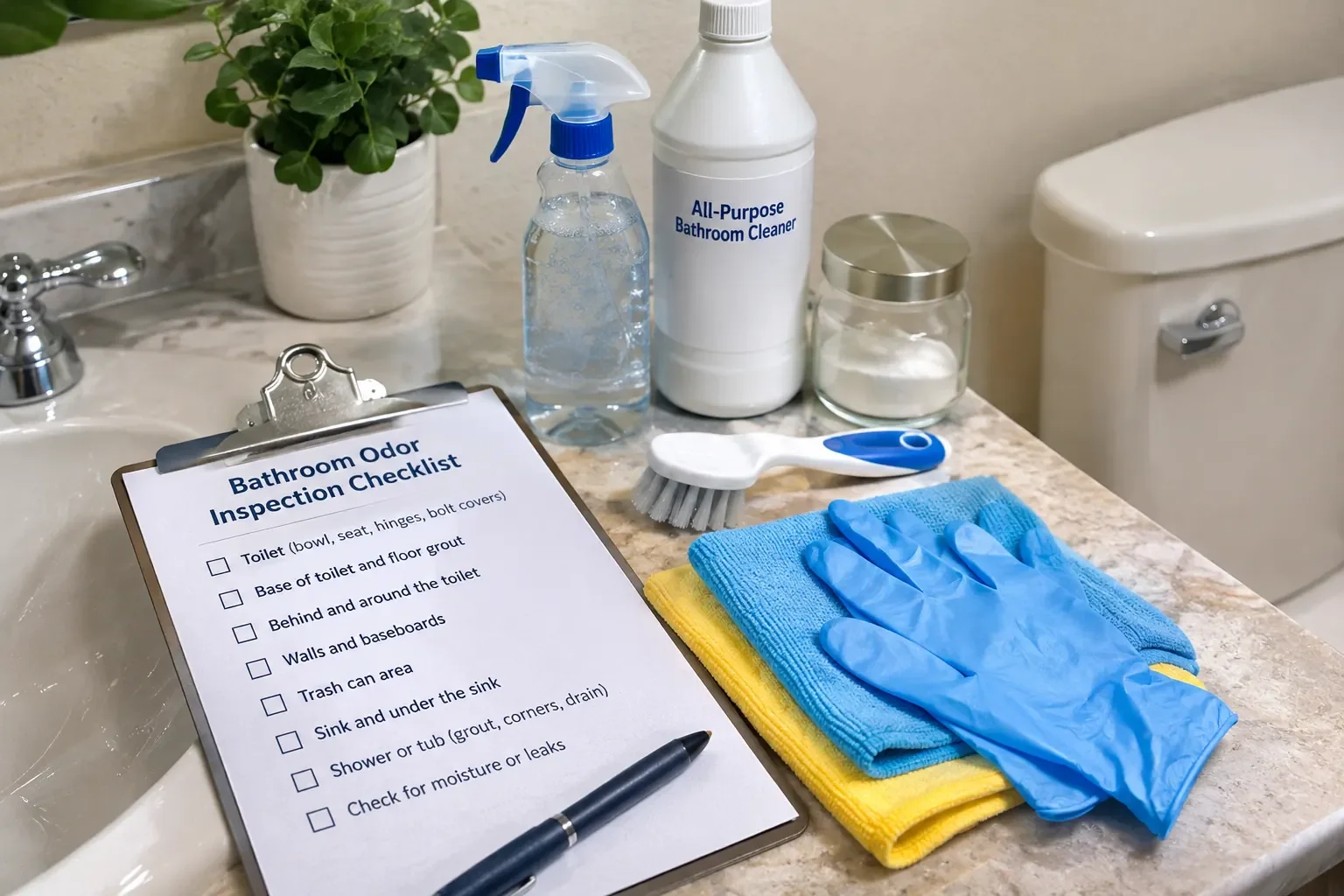
The Tres Maids Bathroom Odor Inspection Checklist
Not sure where to start? Work from top to bottom. You can check off each spot as you inspect it.
Find the smell before you clean again
Inspection tip: If you find dampness, a wobbling toilet, damaged flooring, or a sewer-like smell, stop treating it as a simple cleaning issue and get the right repair help.
What did you find?
Residue on a hard surface? Clean it with a compatible product, then dry it.
A smelly mat or tool? Remove it from the room, clean or replace it, then check whether the room smells better.
Nothing visible, but the smell is strongest at the toilet base? Check for plumbing warning signs instead of pulling up the toilet yourself.
A smell near a drain rather than the toilet? It may be a drain or sewer-gas problem, not urine.
Why Does the Bathroom Smell Like Pee Again the Next Day?
This clue matters more than you might think.
Imagine you clean on Saturday. The room smells fine that night. But by Sunday afternoon, the odor is back.
That can mean new splashes are reaching the same area. Or it can mean old residue is still hiding in a spot you haven't reached.
| What happens | What it may mean | What to try next |
|---|---|---|
| Smell never goes away | Missed residue, a smelly item, or a non-cleaning issue. | Check hinges, tools, grout, and drains. |
| Smell returns after toilet use | New splashes or a missed area that gets wet again. | Check nearby floor and walls; adjust daily wipe-down habits. |
| Smell is worse right after mopping | Dirty mop water or tools, damp residue, or a scent that fades. | Clean the mop and bucket; use fresh water and dry the floor. |
| Smell is strongest at the toilet base | Surface residue or a possible seal/leak issue. | Look for moisture, movement, and floor damage; call a plumber if present. |
| Smell is more like sewage | Possible drain, trap, or vent issue. | Check for dry drains and seek plumbing help if it persists. |
Why can the smell seem worse right after cleaning?
A dirty mop or brush may spread odor instead of removing it. Wetting old residue can also make a smell more noticeable for a while. And a strong cleaning scent may hide the odor only until the scent fades.
Before trying another chemical, check the tools you used and whether the room has dried.
How do you stop the smell from coming back?
Once you've removed the old residue, focus on the spots that get splashed most often. A quick wipe of the toilet's outside and nearby floor can help keep new buildup from sitting there.
Clean up fresh splashes soon. Keep mats dry. Wash cleaning tools. If aiming causes frequent splashing, sitting to urinate may help reduce it.
For the rest of your bathroom routine, a regular cleaning schedule can help prevent buildup. If you're deciding how much cleaning your home needs, read our guide to regular cleaning vs. deep cleaning.
When Cleaning Won't Fix the Smell
Sometimes the bathroom smells bad because something is wrong under or around a fixture.
Call a plumber or tell your landlord if you notice any of these signs:
- The toilet rocks or moves when you sit on it.
- Water appears near the base after flushing.
- The floor feels soft, swollen, or stays damp.
- The smell is like sewer gas rather than urine.
- The odor keeps coming back even when the bathroom is unused.
A failed toilet seal, drain issue, or hidden water damage may need repair. Don't keep adding cleaners to cover it up. And don't seal a leaking toilet base with fresh caulk to hide the problem.
If you rent, take photos of any visible damage and report the issue to your landlord or property manager. If you just moved in and the bathroom already smells, document that too.
Should You Hire a Professional Cleaner?
If the problem is built-up dirt on accessible surfaces, a detailed bathroom cleaning may help. A cleaner can focus on the areas that are part of the agreed service, such as the toilet exterior, floors, and other reachable surfaces.
But a cleaning company can't promise to remove odor trapped under flooring or fix a bad toilet seal. Those are repair problems.
If you're thinking about booking a more detailed clean, our guide to what a deep cleaning includes explains what to ask before you book. You can also explore deep cleaning in Westchester County or recurring house cleaning if you'd like help keeping up with routine work.
If you're worried your bathroom is too dirty for a professional visit, our guide Is My House Too Dirty for a Cleaning Service? may help you decide what to do next.
Have a specific odor concern? Tell the company before the visit. Ask whether the areas you want cleaned are included, and whether toilet-seat removal or special odor treatment is offered. Never assume those tasks come with a standard appointment.
Frequently Asked Questions
What kills the smell of human urine in a bathroom?
The best first step is to remove the urine residue. Clean the affected area with a product approved for that surface. A urine-odor remover may help, but it needs to reach the source. Air freshener alone won't remove old residue.
Why does my toilet smell like urine even though it's clean?
The odor may be coming from the hinges, seat bolts, outside of the bowl, grout, or nearby floor. Those areas are easy to miss when cleaning the inside of the toilet.
Can urine smell get trapped in grout?
Yes, residue and moisture can collect in grout, especially if it is worn or damaged. Use a grout-safe cleaner. If the material beneath the floor is wet or damaged, cleaning the surface may not be enough.
Will vinegar get rid of urine smell?
Vinegar isn't the best choice for every surface or every odor problem. It can damage some natural stone and other finishes. A surface-safe cleaner made for urine odor is a more targeted option. Never mix vinegar with bleach.
Can I use bleach to remove urine odor?
Don't use bleach as a quick fix for urine residue, and never mix it with ammonia or other cleaners. Remove the residue first with a suitable cleaning product. If you need to disinfect, follow the disinfectant label and its safety rules.
Is a urine smell always caused by pee?
No. A drain, toilet seal, or other plumbing issue can cause an odor that you mistake for urine. A sewer-like smell, damp floor, or loose toilet is a sign to look beyond routine cleaning.
How long does it take for the smell to go away?
It depends on where the odor is coming from. Accessible residue may improve after proper cleaning and drying. Odor trapped in damaged grout, flooring, or hidden areas may last until the source is repaired or replaced.
The Bottom Line
You shouldn't have to keep scrubbing the same clean-looking toilet and hoping the smell goes away.
Start small. Check the hinges. Look around the toilet base. Wash the mats. Clean the tools. Then let the room dry and see what changed.
Once you know where the smell is coming from, you can choose the right fix—and stop wasting time on the wrong one.
TRES MAIDS · WESTCHESTER COUNTY, NY
Want a Little Less Cleaning on Your To-Do List?
See what professional house cleaning could cost for your home.
See My Cleaning PriceNo payment required to see your estimate.
Sources and Further Reading
- Norberg et al., “The urine smell around patients with urinary incontinence” (1984) — research on bacterial urease and ammonia odor.
- U.S. Environmental Protection Agency — cleaning, sanitizing, and disinfecting.
- Kohler toilet-seat cleaning instructions — material-specific care and drying hinge areas; consult your model's manual.
- Clorox cleaning guide with urine-remover directions — urine-remover instructions; use the label for the exact product you own.
- CDC guidance on safely using bleach — safe cleaning and warnings against mixing bleach with other cleaners.