
Mattress cleaning guide
You change your sheets, wash your pillowcases, and keep your bedroom tidy. But what about the mattress underneath? Sweat, dust, spills, and everyday use can leave it looking or smelling less than fresh. The good news: you can clean many surface stains and refresh most mattresses at home—as long as you don't soak them.
Quick answer: How to clean a mattress
- Strip the bed. Remove and wash sheets, pillowcases, and the mattress protector according to their labels.
- Check the mattress care instructions. They take priority over general cleaning tips.
- Vacuum if permitted. Use a clean upholstery attachment on the top, seams, and accessible sides.
- Spot-clean marks. Blot with a lightly dampened cloth and a cleaner approved for the mattress fabric. Don't pour liquid directly onto the bed.
- Let it dry completely. Use ventilation, a fan, or a dehumidifier before putting bedding back on.
- Protect it. Add a washable mattress protector to make future cleanup easier.
The most important rule: A mattress is not a washable rug. Excess moisture can penetrate its layers, linger inside, and create new problems. If the manufacturer says not to use water, steam, or certain cleaners, follow those instructions.
Before You Start: Know What Your Mattress Can Handle
Two mattresses can look nearly identical and require very different care. Find the care label or look up the manufacturer's cleaning instructions before applying any product. If you can't identify the mattress, choose the least-wet approach and test any permitted cleaner in an inconspicuous area.
| Mattress type | Safer starting point | Main concern |
|---|---|---|
| Memory foam | Light surface cleaning only, if allowed | Foam can retain moisture; avoid saturation and unapproved steam |
| Latex | Follow the specific brand's care instructions | Some cleaners and prolonged moisture can damage materials |
| Hybrid | Careful surface vacuuming and approved spot cleaning | Foam and fabric layers may hold liquid even with springs below |
| Innerspring | Approved upholstery surface cleaning | Padding and fabric can still trap moisture |
| Pillow-top | Gentle cleaning of the top fabric | Thick cushioning is difficult to dry thoroughly |
Safety first: Never mix cleaning chemicals. In particular, don't mix bleach with ammonia, vinegar, or other cleaners. Avoid saturating the mattress with homemade mixtures, and don't use unapproved disinfectants or pesticides on sleeping surfaces.
What Mattress Manufacturers Actually Recommend
Don't remove a mattress cover just because it has a zipper. A zipper doesn't prove the cover is designed to be washed. Care instructions differ by model and brand, and those instructions should override a generic cleaning tutorial.
| Manufacturer | Published guidance | What it means for you |
|---|---|---|
| TEMPUR-Pedic | Blot spills without rubbing. Wash a removable, washable cover according to its label; gently spot-clean non-removable covers. Never soak or wash TEMPUR-Material. | Keep liquid away from the foam core; use airflow to dry. These are examples, not permission to wash every TEMPUR-Pedic cover. |
| Casper | Casper says its zippered mattress covers are not designed to be removed or washed and warns that removal can void the warranty. | Spot-clean the cover only as directed; don't assume a zipper means machine-washable. |
| Sleep Number | Recommends checking the care guide, using minimal moisture for spot cleaning, and avoiding saturation or harsh chemicals, especially near foam and smart-bed components. | Check the exact mattress model before cleaning; broad blog guidance is not a substitute for its care label. |
Source notes: TEMPUR-Pedic mattress support; Casper mattress cleaning guide (verify page address when publishing); Sleep Number, “How to Clean Your Mattress: A Simple Step-by-Step Guide” (April 28, 2026). Check your model's current documentation.
Key takeaway: Mattress construction alone does not determine safe cleaning. Two memory-foam mattresses can have different cover rules. If the care label is missing, contact the manufacturer before trying a wet treatment.
What You'll Need to Clean a Mattress
- Vacuum with a clean upholstery attachment, if permitted by the manufacturer
- White microfiber cloths or clean white towels
- A small bowl of water and a mild, manufacturer-approved cleaning solution
- Optional fabric-safe enzyme stain remover, only if approved for the material and stain
- Dry absorbent towels
- Fan or dehumidifier
- Washable mattress protector
You don't need a cabinet full of products. Using less liquid and following the care label is usually more important than using a stronger cleaner.
How to Clean a Mattress Step by Step
- Remove the bedding. Take off sheets, pillowcases, blankets, and the mattress protector. Launder washable items according to their care labels. If you have a persistent odor problem, make sure the bedding isn't the source before treating the mattress.
- Inspect the mattress. Look for stains, damp areas, tears, unusual discoloration, and signs of pests. If you see suspected mold or bed bug activity, stop and assess the problem before attempting routine cleaning.
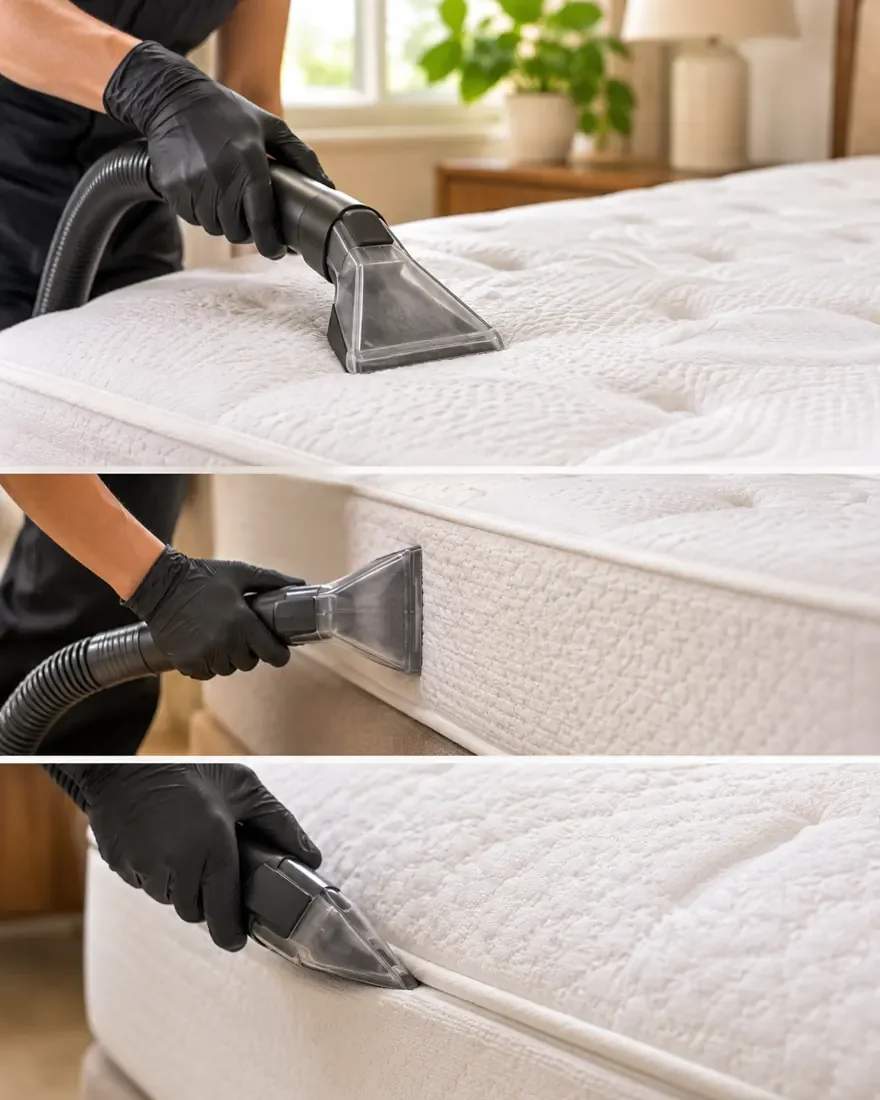
- Vacuum the surface if allowed. Use a clean upholstery attachment with gentle passes across the top, around seams, and along accessible edges. Don't press aggressively or damage delicate fabric.
- Treat stains one at a time. Identify the stain first. Apply a small amount of an approved cleaner to a cloth rather than pouring it onto the mattress. Blot gently from the outside of the mark inward. Avoid vigorous scrubbing.
- Remove residue carefully. If the product instructions call for rinsing, use a barely damp cloth rather than soaking the surface. Blot with a dry towel to lift remaining moisture.
- Air-dry completely. Run a fan, improve ventilation, and use a dehumidifier if needed. Do not replace sheets or sleep on the mattress while the cleaned area remains damp.
- Add a mattress protector. Once fully dry, fit a washable protector. It won't eliminate the need for cleaning, but it can reduce how much sweat or a future spill reaches the mattress.
Does Vacuuming a Mattress Really Remove Dust Mites and Allergens?
Vacuuming removes accessible dust and debris, but research on allergen reduction is mixed. It's more accurate to say that vacuuming may help reduce some allergen exposure than to claim it kills dust mites or cures allergies.
| Study | What researchers found | What we shouldn't conclude |
|---|---|---|
| Wu et al., 2012 20 volunteers; daily vacuuming for 8 weeks | Measured mattress dust-mite allergens fell from 4.07 to 0.42 micrograms (geometric means), an 85.1% reduction. Dust weight and other measured contaminants also declined. | It does not prove occasional vacuuming produces the same results, or that allergy symptoms improve. |
| Jeon et al., 2019 40 children; randomized comparison over 2 weeks | The group vacuuming mattresses daily had less dust and improved reported allergic-rhinitis symptoms, but measured dust-mite allergen concentrations did not decline significantly. | It does not establish that vacuuming reliably lowers measured allergens in every home or replaces medical treatment. |
These studies differed in participants, duration, and outcomes, so they aren't a direct head-to-head comparison. For broader prevention, the EPA's indoor-air guidance recommends washing bedding, using allergen-proof mattress and pillow covers where appropriate, and managing indoor moisture. If allergies are a concern, discuss a practical exposure-reduction plan with a clinician.
Research: Wu et al., Journal of Asthma (2012), PMID 22316179; Jeon et al., Allergy Asthma Immunology Research (2019), PMCID PMC6658412.
How to Get Stains Out of a Mattress
The best treatment depends on what caused the stain. A yellow mark from years of perspiration is different from a fresh spill or dried blood. Always check care instructions and test an approved product first.
Yellow sweat stains
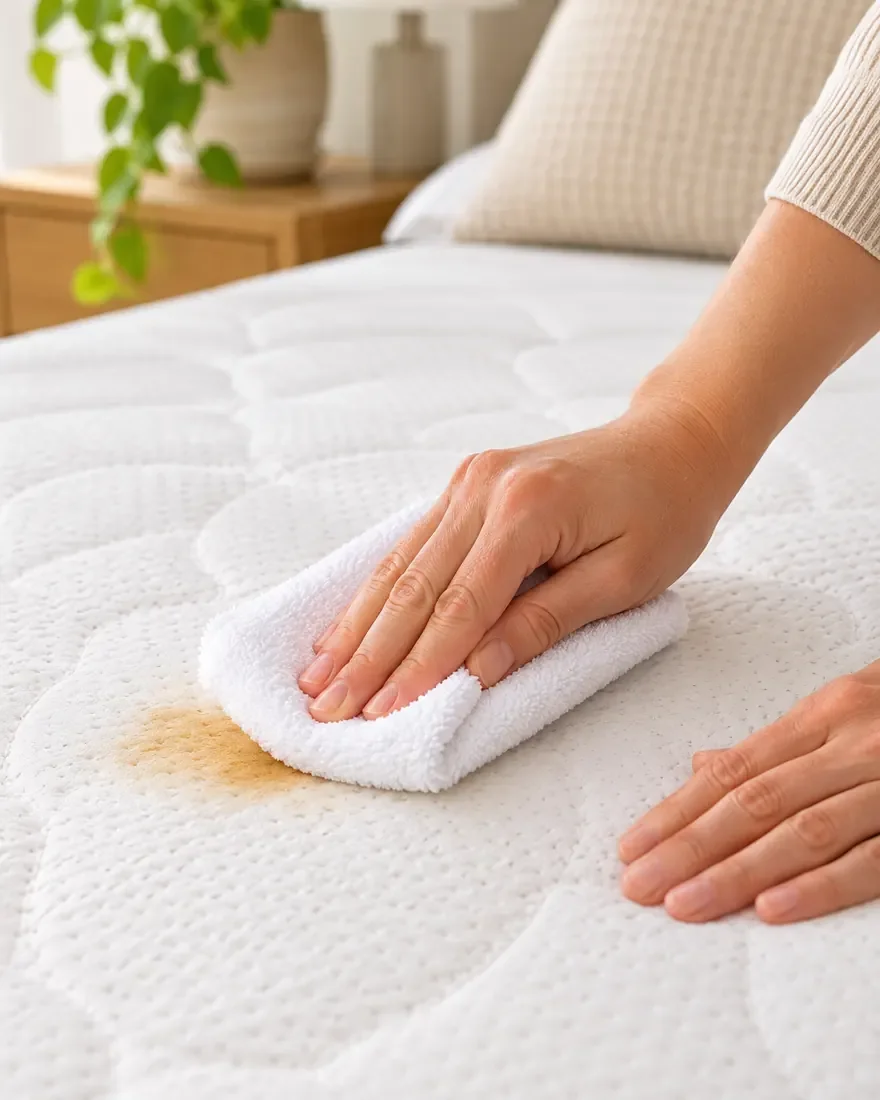
Sweat and body oils can gradually leave yellow or dingy areas. Begin with gentle surface cleaning using an approved upholstery cleaner and a lightly damp cloth. Blot rather than scrub. Old discoloration may not disappear completely, even after the surface is clean.
Fresh urine
Act quickly. Blot with clean towels to absorb as much liquid as possible without pushing it deeper. If the mattress manufacturer allows it, use an appropriate fabric-safe enzyme cleaner according to its label, including any required testing and drying instructions. Don't flood the mattress in an attempt to reach urine deep inside.
Dried urine or lingering urine smell
Dried urine can be harder to address because it may have traveled into padding or foam. An approved enzyme product may help with accessible residue, but it cannot reliably remove contamination that has soaked through the interior. If the odor keeps returning, repeated wet cleaning can make matters worse; consider a qualified specialist's assessment or replacement.
Blood stains
Use cold water—not hot—on a clean cloth if the care instructions permit it. Blot carefully and avoid spreading the stain. A product specifically approved for the mattress fabric and blood stains may help, but don't assume peroxide or other household chemicals are safe for every mattress. Older blood stains may remain visible.
Food, drinks, and unknown stains
Blot fresh liquid promptly. For a dried or unknown stain, start with the least aggressive manufacturer-approved method. Avoid applying several different cleaners in succession; chemical residue and moisture can make the problem harder to diagnose.
Why brown rings sometimes appear after cleaning
A water ring isn't always a new spill. Moisture can move existing dirt, residue, or fabric-finishing materials toward the edge of a damp area as it dries, leaving a darker outline. Adding more water may enlarge the ring. Stop soaking the area and consult the mattress care instructions or an upholstery professional.
How to Get Smells Out of a Mattress
First identify the source. A musty smell, a recent urine accident, and ordinary stale bedding need different responses.
- Stale bedding smell: Wash the bedding and protector, ventilate the room, and check whether the mattress itself still smells.
- Surface odor: If allowed, clean the affected surface with a suitable product and dry it fully.
- Urine or pet odor: An approved enzyme cleaner may help accessible organic residue. Persistent odor can indicate deeper saturation.
- Musty smell: Investigate dampness, humidity, and possible mold. Don't cover a suspected moisture problem with fragrance.
Does baking soda actually clean a mattress?
Baking soda may help reduce some odors, but it is not a substitute for removing a stain, cleaning contamination, or disinfecting a mattress. Some manufacturers advise against applying powders because residue can be difficult to remove or may affect materials. Check your care instructions before using it.
Why does the mattress still smell after cleaning?
Often, the visible surface is not the whole problem. A spill may have reached foam or padding beneath the cover. Odor can persist or return when the mattress warms up or humidity rises. If the interior is contaminated, surface cleaning may not solve it.
Mattress Cleaning Hacks: What Works—and What Doesn't?
| Popular tip | What it may do | What it cannot promise |
|---|---|---|
| Baking soda | May neutralize some acidic odors on contact | Doesn't reliably remove absorbed urine, sweat residue, dust mites, or contamination inside foam; fine residue can be hard to vacuum out |
| White vinegar | May affect some odors or surface residues if the manufacturer permits it | Not a universal mattress disinfectant; adding liquid may worsen moisture problems |
| Hydrogen peroxide | May lighten some surface discoloration on compatible fabrics | Can bleach or damage fabric; not a universal mattress-safe stain treatment |
| Enzyme cleaner | May break down certain organic residues where the product can reach them | Cannot be assumed safe for every cover or effective after a spill reaches deep foam |
| Steam or extraction | Can clean certain compatible upholstery surfaces | Doesn't guarantee mattress-core drying or whole-mattress disinfection; may violate manufacturer instructions |
Why we're cautious about baking soda: Its chemistry supports limited neutralization of some acidic odors, but that is not the same as removing the source of a deep odor. Homeowner discussions also raise a practical concern about powder remaining in fabric or entering vacuums. Treat those reports as experiences, not controlled scientific evidence; check your vacuum's instructions before collecting fine powders.
Why we're cautious about peroxide: Yellowing can come from sweat and oxidized body oils, but different fabrics react differently to stain treatments. Sleep Foundation's mattress-care resources discuss peroxide-based approaches while warning that peroxide can damage some fabrics. Always defer to the exact mattress care label.
Find the Right Mattress Cleaning Method
Not sure where to begin? Choose your main problem and mattress type for a conservative starting plan. The manufacturer's instructions always come first.
Mattress Cleaning Troubleshooter
Your starting plan
Choose your options, then select “Show My Cleaning Plan.”
This guide is general information, not a substitute for your mattress manufacturer's care instructions.
How to Sanitize or Disinfect a Mattress Safely
Cleaning, sanitizing, and disinfecting are not the same thing. Cleaning removes visible soil and some contaminants. Sanitizing and disinfecting are specific antimicrobial claims that depend on a product's labeled use, method, and contact time.
Don't assume vinegar, essential oils, alcohol, baking soda, or sunlight reliably disinfect a mattress. A product labeled for a hard countertop is not automatically suitable for porous mattress fabric. Some disinfectants can damage materials or leave residues unsuitable for a sleeping surface.
If you need disinfection because of a specific contamination event, consult the mattress manufacturer and a qualified professional about what is actually possible. In some situations, replacing a heavily contaminated mattress is more appropriate than attempting to disinfect its interior.
Can You Deep-Clean a Mattress With a Carpet Cleaner or Steam Cleaner?
It may be tempting to use a carpet extractor or handheld steam cleaner, especially when a stain won't budge. But those machines can introduce more moisture or heat than a mattress can tolerate.
| Method | Potential benefit | Important limitation |
|---|---|---|
| Upholstery vacuum | Removes accessible loose debris | Does not wash the interior or disinfect |
| Spot cleaning | Treats localized surface marks | Won't reliably reach deeply absorbed spills |
| Carpet/upholstery extractor | Can rinse and recover some liquid on compatible upholstery | May leave moisture inside mattress layers; not universally approved |
| Steam cleaner | Uses heat and moisture at the surface | Heat and moisture can damage materials; cannot be assumed to sanitize the full mattress |
Our recommendation: Don't use steam or extraction unless the mattress manufacturer specifically allows the method and you can meet its drying requirements. Even a machine that extracts water cannot guarantee the mattress core is dry.
Why moisture control matters more than a fixed drying time
The EPA's mold guidance emphasizes moisture control and prompt drying of wet materials, generally within 24–48 hours to help prevent mold growth. That is not a guarantee that a soaked mattress can be safely dried at home within that window. A mattress core may retain moisture even after the cover feels dry. The EPA also advises keeping indoor relative humidity around 30–50% as part of broader indoor-air management.
How to Dry a Mattress After Cleaning
Drying is one of the most important—and most overlooked—steps.
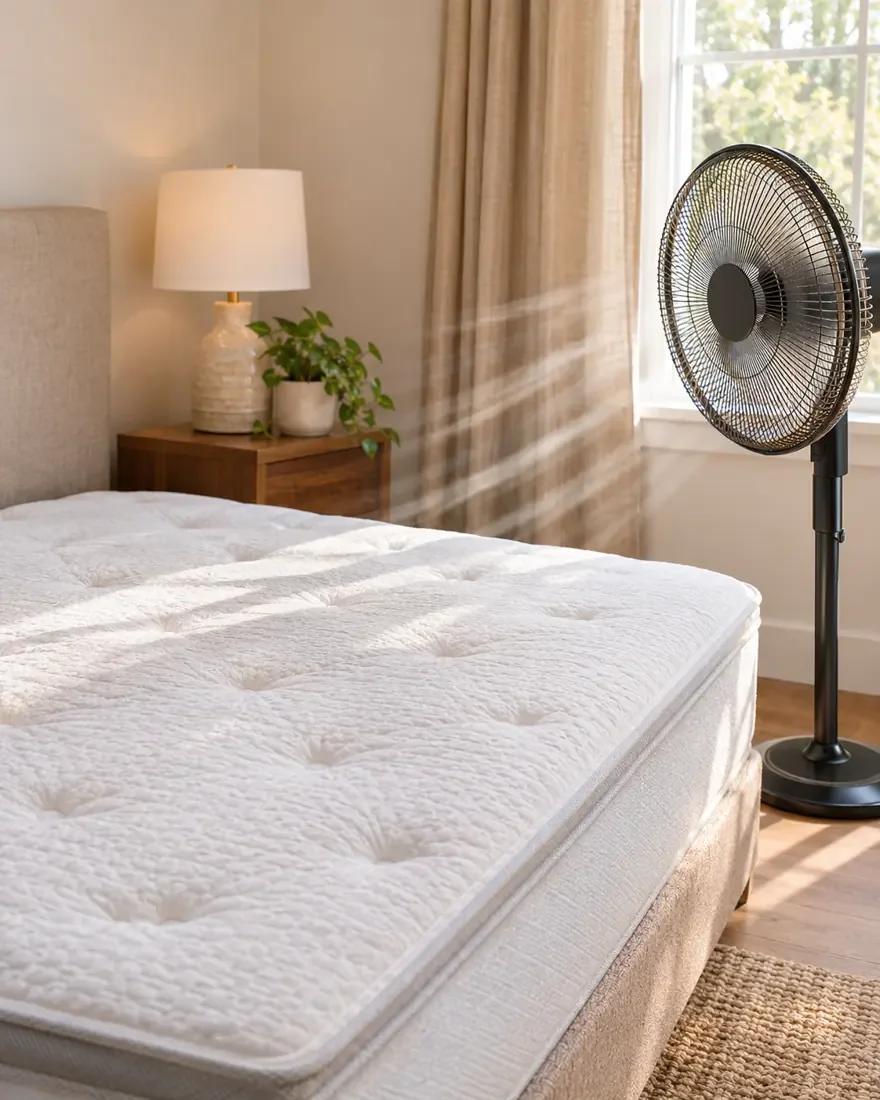
- Blot away surface moisture with clean, dry towels.
- Increase airflow using a fan and ventilation.
- Use a dehumidifier if the room is humid.
- Keep bedding off until the cleaned area is completely dry.
- Don't assume a dry-feeling surface means the interior is dry after a large spill.
There is no reliable universal drying time. It depends on the mattress construction, how much moisture entered, room humidity, and airflow. Avoid applying direct high heat unless the manufacturer explicitly permits it.
Important: If a large amount of liquid soaked into the mattress, or it stayed wet for an extended period, surface drying alone may not resolve the risk of trapped moisture.
How to Clean a Used or Display Mattress
Before cleaning a secondhand or display mattress, inspect it carefully. Look for unexplained staining, odors, moisture damage, torn covers, and signs of bed bugs. A clean-looking surface does not establish the mattress's history or prove that its interior is sanitary.
A mattress encasement can serve specific protective purposes, but it is not a substitute for investigating an infestation or serious contamination. If you suspect bed bugs, consult a qualified pest-control professional rather than spraying unapproved products on the mattress.
When the mattress's history is uncertain or there are signs of mold, pests, or deep contamination, passing on the mattress may be the safer choice.
When Should You Replace a Mattress Instead of Cleaning It?
| Situation | Reasonable next step |
|---|---|
| Light surface dust | Routine maintenance following care instructions |
| Small fresh surface stain | Prompt approved spot cleaning |
| Old discoloration without odor | Try approved surface cleaning; some staining may remain |
| Repeated urine odor or deeply soaked padding | Professional assessment; replacement may be necessary |
| Suspected mold or prolonged wetness | Stop routine cleaning and seek qualified guidance; replacement may be warranted |
| Suspected bed bugs | Professional pest assessment; don't rely on surface cleaning alone |
A mattress is made of multiple layers. When contamination reaches places you cannot inspect or dry, more cleaning product isn't necessarily the answer.
How Often Should You Clean Your Mattress?
There isn't one perfect schedule for every mattress. Wash sheets and protectors according to their labels, deal with spills promptly, and inspect the mattress when changing bedding. Vacuum periodically only if your manufacturer recommends or permits it.
A washable mattress protector is one of the simplest ways to make maintenance easier. Rotate the mattress only if the manufacturer recommends it; many mattresses should not be flipped.
If pet hair and everyday messes are part of life, our guide to keeping your house clean with dogs offers additional practical habits. For laundry upkeep, see how to clean a washing machine.
Frequently Asked Questions
What is the best thing to clean a mattress with?
The best option is whatever the mattress manufacturer approves for its fabric and construction. A clean cloth, minimal moisture, and a suitable mild cleaner are often a safer starting point than harsh chemicals.
Can you clean a mattress with baking soda?
Some manufacturers permit it, but others advise against powders. Baking soda may reduce some odors; it does not remove deeply absorbed contamination or reliably disinfect the mattress.
How do you remove yellow stains from a mattress?
First check the care instructions. Gently blot with a suitable approved upholstery cleaner, avoiding saturation. Older sweat-related discoloration may not disappear completely.
Can you use vinegar on a mattress?
Only if the manufacturer approves it for that mattress and purpose. Vinegar is not a universal disinfectant, and applying too much liquid can create moisture problems.
Can you clean a memory foam mattress?
Many memory foam mattresses permit limited surface care, but they are especially vulnerable to retained moisture. Follow the exact brand's instructions and avoid soaking or unapproved steam cleaning.
Can you use a carpet cleaner on a mattress?
Not by default. Some mattresses and cleaning methods may be compatible, but extraction can leave water inside padding or foam. Check the manufacturer's instructions before using one.
How long does a mattress take to dry after cleaning?
There is no universal drying time. A lightly treated surface may dry much faster than a mattress with moisture deep inside. Don't replace bedding or sleep on it until it's fully dry.
How can I sanitize a mattress without washing it?
There is no universal at-home method that reliably sanitizes every mattress without washing. Follow the manufacturer's guidance and only use antimicrobial products specifically labeled for the intended mattress material and use. Deep contamination may require specialist assessment or replacement.
A Cleaner Mattress Starts With Less Moisture—and the Right Method
For most routine mattress care, the safest plan is simple: check the label, remove loose debris if allowed, treat small surface stains carefully, and let everything dry completely. When liquid has reached deep inside, recognize the limits of home cleaning rather than repeatedly soaking the same spot.
If the rest of your home could use a reset, you may also find our guide to what a professional deep cleaning includes helpful. Standard house cleaning and specialized mattress cleaning are different services, so always confirm the scope before booking.
Spend Less Time Cleaning Your Home
Tres Maids helps Westchester homeowners stay on top of everyday house cleaning. Explore a personalized price for your home—without a commitment to book.
See My Cleaning PriceNo payment required to see your estimate.
How we researched this guide: We prioritized product-specific manufacturer instructions, peer-reviewed studies, and public-health guidance. We used homeowner discussions to identify questions, not to prove cleaning methods work. The comparisons above synthesize outside sources; Tres Maids has not conducted or claimed an original controlled mattress-cleaning experiment. Guidance can change, so verify the instructions for your mattress model before cleaning.
Image note: Illustrations in this guide are AI-generated for educational purposes and do not depict actual Tres Maids cleaning jobs or documented results.
Helpful References
Always prioritize the instructions for your exact mattress model. These resources provide additional guidance on product safety and contamination concerns.