
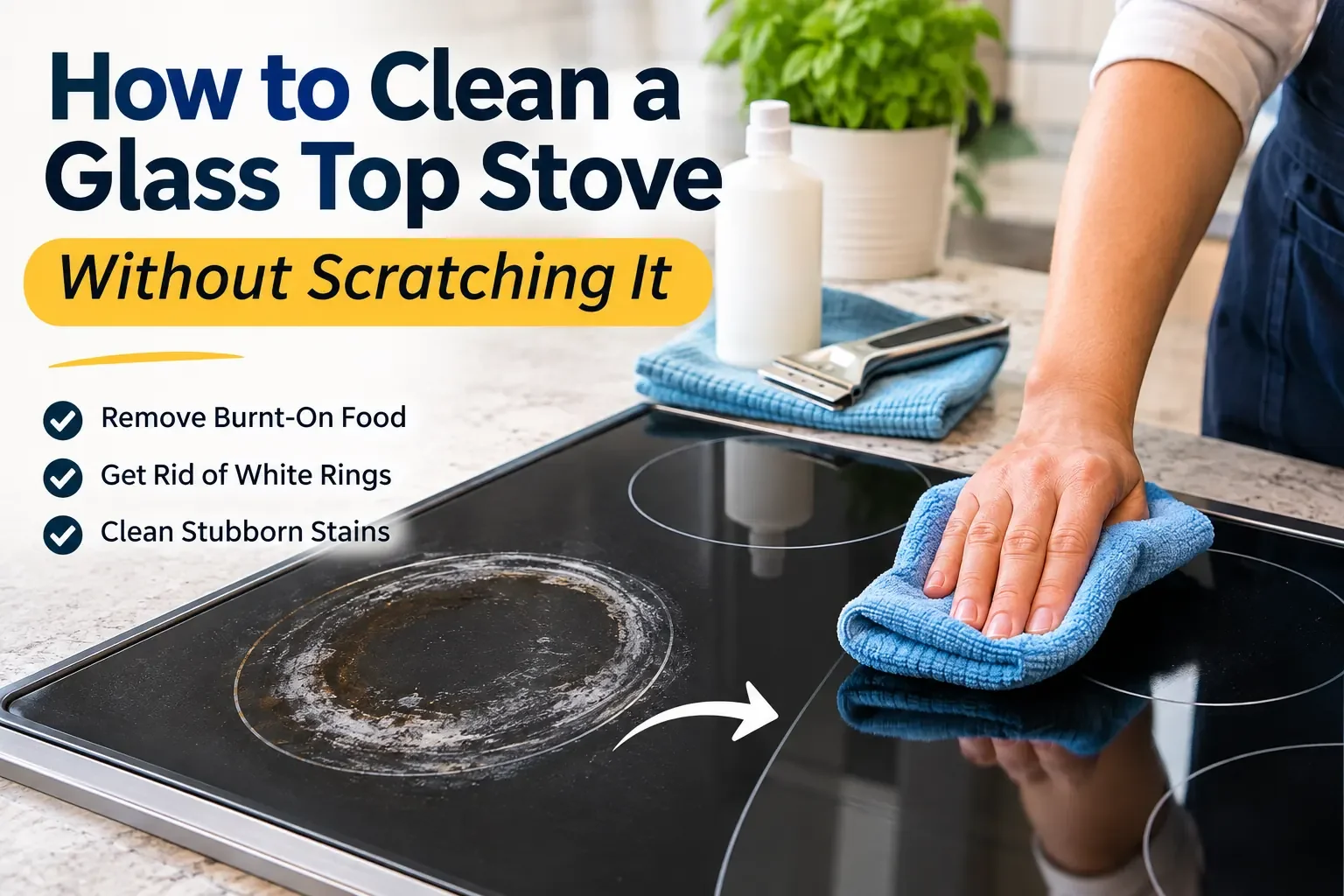
You wipe down your glass stove. The crumbs are gone. Then the light hits it—and there’s still a cloudy ring around the burner. Or worse, a burnt spot you’re afraid to scrub.
Good news: you don’t have to attack it with a rough sponge. The safest starting point is a cool cooktop, a soft cloth, and a cleaner approved for your model. Stuck-on food may need a special cooktop scraper, but the instructions matter.
How to clean a glass-top stove without scratching it
- Turn it off and let it cool as your cooktop manual directs.
- Lift loose crumbs and grit with a soft, damp cloth.
- Apply an approved glass-ceramic cooktop cleaner with a nonabrasive pad or soft cloth.
- For stuck-on residue, use a purpose-made cooktop scraper only if your manual allows it. Follow the specified angle and temperature.
- Wipe away the cleaner and buff dry with a clean, soft cloth.
Important exception: Melted plastic and sugary spills may require prompt, special handling. Read your model’s instructions before touching a hot surface. Never use a cracked or chipped cooktop until it has been assessed by a qualified professional.
What you need before you start
Most everyday messes need only a few simple supplies. Start gentle. You can always repeat an approved cleaning step, but you can't undo a scratch.
- Two clean, soft microfiber cloths—one for wiping, one for drying
- A small amount of mild dish soap and warm water for routine soil, if your manual permits
- A cleaner labeled for glass-ceramic cooktops and approved by your manufacturer
- A manufacturer-approved nonabrasive cleaning pad, if needed
- An approved glass cooktop scraper for stubborn deposits, only if your model allows it
Check your manual first. Bosch says to let its induction and electric cooktops cool completely before routine cleaning and recommends a low scraper angle of about 20°–30°. Maytag describes scraping a warm—not hot—surface at approximately 45°. Those instructions are different for a reason: your model’s manual takes priority over a general internet tip.
How to clean a glass stove top, step by step
Step 1: Turn off the stove and check the heat indicator
Make sure every burner is off. Wait until the surface reaches the temperature specified in your appliance instructions. For everyday cleaning, a fully cooled cooktop is the simplest, safest starting point.
Don't test a hot burner with your fingers. Residual heat can remain after the burner turns off.
Step 2: Remove crumbs before wiping
That tiny grain of salt or dried food may seem harmless. But dragging grit under a cloth can leave marks. Gently lift loose debris first with a clean, damp microfiber cloth. Use a fresh section of cloth as you go.
Step 3: Clean grease and everyday spills
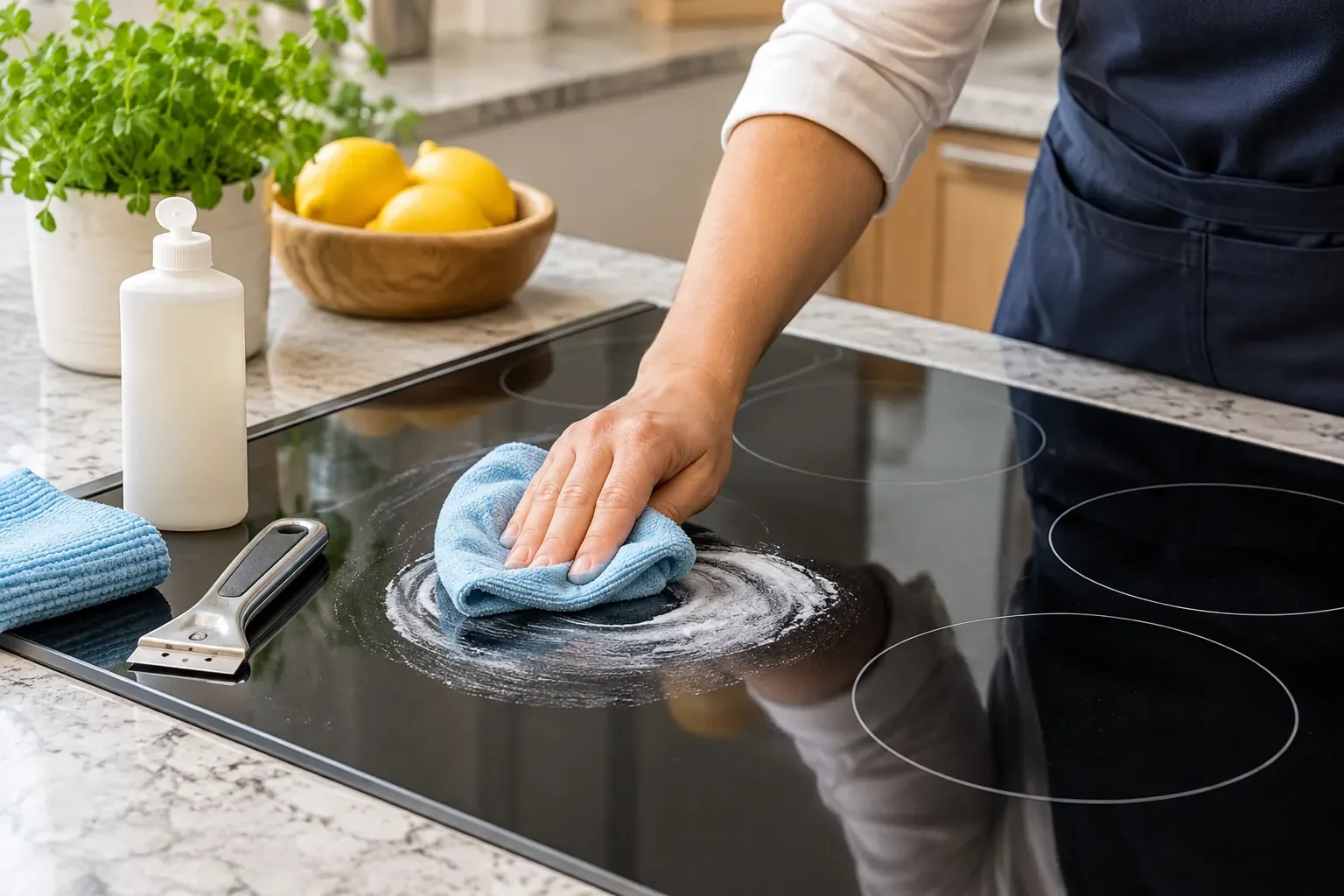
For light grease, use a little mild dish soap and water if your manufacturer allows it. For a more stubborn film, apply a small amount of approved glass-cooktop cleaner according to its label.
Spread it gently with the recommended cloth or pad. You don't need to press hard. Follow the cleaner's instructions for wiping, drying, or allowing it to form a haze before buffing.
Step 4: Deal with stuck-on food carefully
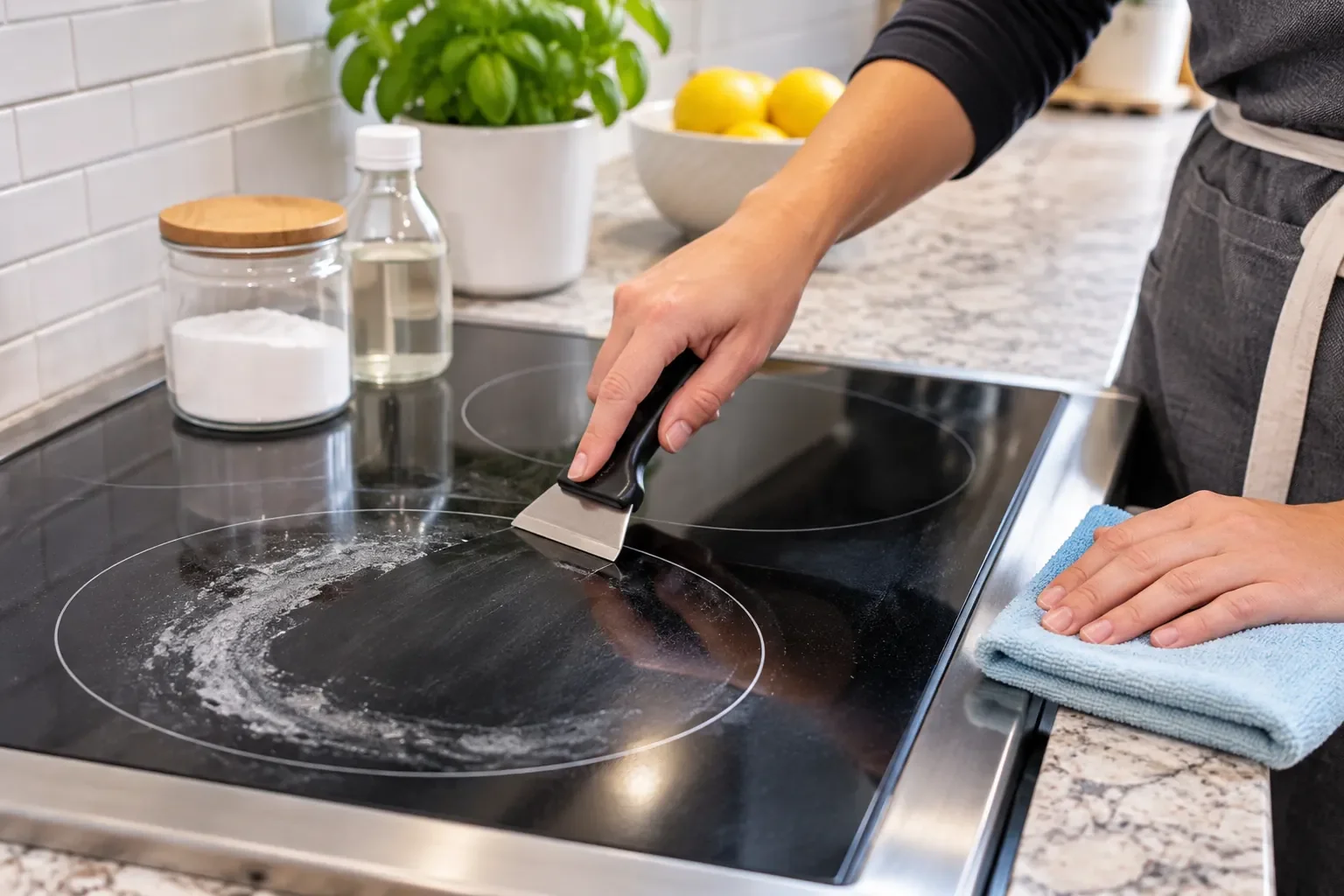
If you can see or feel a raised, baked-on patch, don't reach for steel wool. Check whether your manufacturer permits a purpose-made glass scraper. If it does, follow its exact angle, surface-temperature, and handling instructions. Keep the blade flat against the surface as directed, without digging with the corners.
Do not use a kitchen knife or improvised blade. And don't scrape a mark that looks like a scratch or a chip.
Step 5: Wipe clean and buff dry
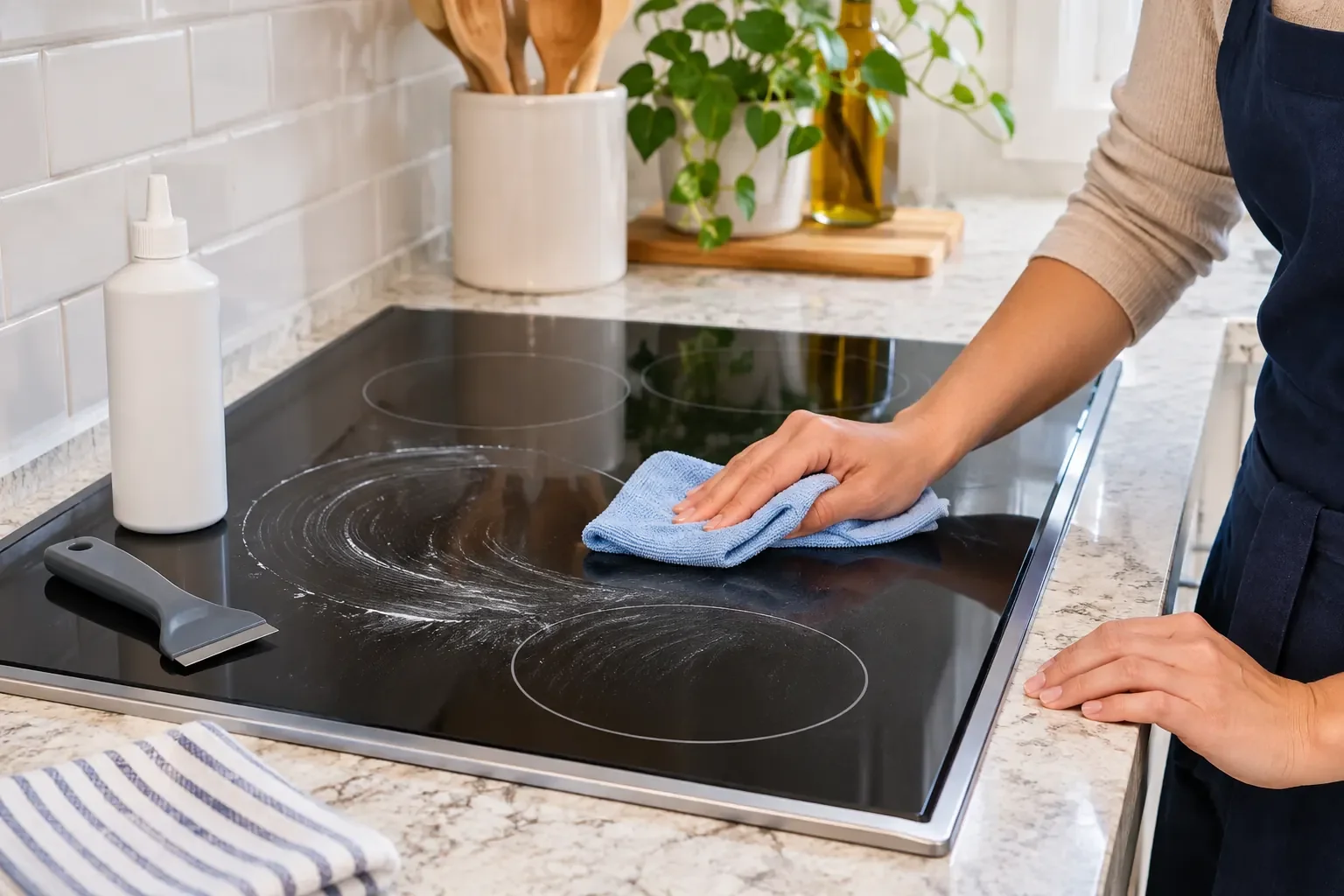
Remove the cleaner with a fresh, slightly damp cloth, following the product directions. Then buff with a clean, dry microfiber cloth. Look at the glass from a few angles once it's dry.
Why wait until it's dry? Some white or cloudy marks temporarily disappear when wet, only to show up again after the water evaporates. A dry check tells you more than a quick glance at a damp surface.
What's stuck on your glass cooktop?
Not every mark needs the same fix. A burnt crust, a cloudy ring, and a scratch can look similar in a photo—but treating them all with more scrubbing is a mistake.
Find the safest next step
Choose the description that looks most like your cooktop. This guide can't diagnose physical damage from appearance alone.
Raised, burnt-on food
Let the cooktop reach the temperature your manual specifies. Use approved cooktop cleaner; for a raised deposit, an approved cooktop scraper may help. Never dig at the glass.
Stop if: you notice a chip, crack, or increasing surface damage.
Always check your exact model's manual. The result is cleaning guidance, not a definitive diagnosis.
How to remove white rings, cloudy haze, and rainbow marks
Here's the frustrating part: the stove may feel perfectly smooth and still look dirty. That doesn't automatically mean you ruined it. It also doesn't guarantee the mark will wash away.
| What you see | Possible cause | Safest first move |
|---|---|---|
| Chalky white ring | Mineral deposits, cooking residue, or surface alteration | Use approved cooktop cleaner; inspect again when dry |
| Rainbow or silvery sheen | Cookware metal transfer, film, or other discoloration | Try the manufacturer's recommended cleaner and pad |
| Cloudy mark that looks clear when wet | Thin residue or altered surface reflection | Clean once with an approved method; assess dry |
| Fine lines or pits | Possible scratching or permanent surface damage | Stop abrasive attempts; consult the manufacturer |
Why white rings may not come off with vinegar
Vinegar can help with some mineral residue on compatible surfaces, but it won't remove every type of cooked-on grease, metal transfer, or damaged glass. Maytag lists diluted vinegar as an optional cleaning method; other manufacturers may specify different products.
If vinegar and dish soap did nothing, don't keep making the solution stronger. Switch to the approved cooktop cleaning method for your model instead.
What if the white haze disappears when wet?
Water can change how light reflects from a surface. That can temporarily hide both very thin residue and some surface changes. “It disappears when wet” is a clue, not a diagnosis.
Clean as directed, dry thoroughly, and compare the appearance. If repeated approved cleaning makes no difference, stop experimenting with abrasive polishes or long chemical soaks. Ask the manufacturer whether the mark may be permanent.
Can you remove scratches from a glass cooktop?
Cleaning products may remove grime sitting in or around a line, making it look less noticeable. They cannot reliably erase a physical scratch or pit. Avoid DIY automotive rubbing compounds, abrasive powders, and aggressive polishing: they can make the finish worse.
If the glass is cracked or chipped, stop using the cooktop and contact the manufacturer or a qualified appliance technician. Cleaning is not a repair.
How to remove burnt-on food and stubborn burner rings
Burnt food is different from a flat white haze. If a deposit is raised, an approved scraper may lift it off instead of forcing you to scrub harder.
- Identify the mess. Is it raised food, or is the glass itself discolored?
- Check your model's instructions. Some brands permit a cooktop scraper; angles and temperature instructions differ.
- Soften or clean as directed. Use the approved cleaner and pad. Maytag also describes a baking-soda-and-water paste for certain burnt-on residues.
- Lift deposits only with an approved tool. Use gentle, controlled passes and keep the blade corners from digging into the surface.
- Buff and reassess when dry. If there's no improvement after reasonable, approved attempts, don't keep escalating.
Special warning for melted plastic or sugar: Certain sugary spills and melted materials can bond to or pit glass-ceramic surfaces. Some manufacturers give special instructions for prompt removal while the surface is still hot, using protective equipment. That is not a general recommendation to scrape hot glass. Follow your exact appliance manual and avoid burns.
Which glass stovetop cleaners are safe—and what should you avoid?
You'll find plenty of internet advice recommending everything from baking soda to oven cleaner. The better question is: Does your cooktop manufacturer approve it?
| Product or tool | Our guidance |
|---|---|
| Mild dish soap + soft cloth | Useful for everyday grease when allowed by your manual; rinse and dry to avoid film. |
| Dedicated glass-ceramic cooktop cleaner | A strong default choice when approved for your model; follow the label. |
| Purpose-made glass scraper | For stubborn raised deposits only when approved; follow the model's angle and temperature. |
| Baking soda paste | Maytag recommends it for some burnt-on food. Don't assume every model allows it. |
| Vinegar | Optional in some manufacturer guidance, including Maytag; not a cure for scratches or all haze. |
| Magic Eraser, Pink Stuff, or generic Bar Keepers Friend | Don't assume they're scratch-safe. Check the exact product formulation and appliance instructions; glass-cooktop-specific products differ from general abrasives. |
| Steel wool, scouring powders, kitchen knives, oven cleaner | Avoid unless an exact manufacturer instruction explicitly states otherwise; these can scratch, damage, or leave unsafe residue. |
A note about window cleaner: Bosch specifically warns against ammonia-containing window cleaner on its cooktops. Don't substitute household glass spray for a product approved for cooking surfaces.
How to keep a black glass stove top clean without streaks
The easiest ring to remove is the one that never gets baked on. A few small habits can spare you a long cleaning session later.
- Wipe spills after cooking once the cooktop is safe to clean, following your manual's exceptions for sugar and melted materials.
- Keep pan bottoms clean and dry. Grease and grit underneath cookware can transfer to the glass.
- Lift pans instead of sliding them. Dragging heavy or gritty cookware can scratch the surface.
- Use a separate dry microfiber cloth. It helps prevent leftover cleaning film from drying into streaks.
- Don't leave cleaner residue behind. Follow the product label for removal and buffing.
Picture finishing dinner and giving the cool stovetop a quick wipe instead of spending Saturday trying to remove last week's burnt-on rings. That's the kind of simple routine that makes a kitchen feel easier to manage.
When cleaning isn't enough
Sometimes a stubborn ring is removable buildup. Sometimes it's a surface change. If approved cleaning doesn't improve it—or if you see pits, chips, or cracks—it's time to stop rather than scrub harder.
A professional house cleaner may help with everyday kitchen grease and routine surface care, but no cleaning service should promise to repair scratched, chipped, or pitted glass. For possible appliance damage, contact the manufacturer or a qualified technician.
If the rest of the house keeps piling up while you work on the kitchen, you might find our guide to keeping up with housework when working full-time helpful. You can also see what a deep cleaning includes or compare regular versus deep cleaning before deciding what kind of help makes sense.
Frequently asked questions
What is the safest way to clean a glass-top stove?
For routine messes, start with a cooled cooktop, a soft cloth, and a manufacturer-approved cleaner. Remove loose grit before wiping and buff dry. Follow your model's instructions for any stubborn residue.
Can I use Dawn dish soap on a glass stove top?
A small amount of mild dish soap can help with everyday grease if your appliance instructions allow it. Rinse away the soap film and dry with a clean, soft cloth.
Will baking soda scratch a glass cooktop?
Maytag describes using a baking soda-and-water paste for some burnt-on residues, but not all cooktop makers give the same advice. Avoid hard scrubbing and check your model's manual first.
Can I use a razor blade on a glass stovetop?
Some manufacturers permit purpose-made glass-cooktop scrapers. Bosch describes a low angle around 20°–30°, while Maytag describes approximately 45°. Use only an approved scraper and follow the exact instructions for your model—not a loose kitchen blade.
How do I remove white rings from an induction stove?
First try the cleaning product and pad approved for your model. White rings may be mineral deposits, cookware transfer, baked-on residue, or a surface change. If approved cleaning does not improve the mark, avoid aggressive polishing and contact the manufacturer.
Why does my black glass stove look cloudy after cleaning?
Possible causes include leftover cleaning film, minerals, metal transfer, or surface wear. Buff it completely dry and reassess. A mark that looks clear when wet is not proof that it can be removed.
Can scratches or pitting be removed with cleaner?
No cleaner can reliably repair physically scratched or pitted glass. If the cooktop is cracked or chipped, stop using it and get qualified advice.
What should I do if plastic melts on the cooktop?
Check your appliance's instructions immediately. Some manufacturers require special prompt removal procedures because melted plastic or sugary spills may permanently damage glass-ceramic surfaces. Do not improvise with a hot scraper or risk a burn.
The bottom line
You don't need the strongest cleaner to get a glass stove looking better. You need the right method for the mark you're seeing: gentle cleaning for grease, approved scraping for certain raised deposits, and the good judgment to stop when a mark may be physical damage.
Start with the simple steps above. If the stain doesn't budge, use the stain guide instead of reaching for a rougher sponge.
Enjoy your kitchen. Let us help with the rest.
Keeping up with the whole house takes time. Tres Maids helps Westchester County homeowners with recurring house cleaning and deep cleaning. See an estimate and decide what works for you.
See My Cleaning PriceNo payment required to see your estimate.Manufacturer references
The guidance above draws on appliance-maker instructions, which can differ by model. Always use your specific owner's manual as the final authority.
- Bosch Home Appliances — induction and electric cooktop cleaning guidance (if the support page has moved, use Bosch's cooktop cleaning support search).
- Maytag — How to Clean Glass Electric Cooktops and Stovetops.
- Whirlpool — glass-top stove cleaning guidance.
Images in this article are AI-generated illustrations, not photographs of actual Tres Maids customer jobs or documented before-and-after results.