
Bathroom cleaning guide · Tres Maids
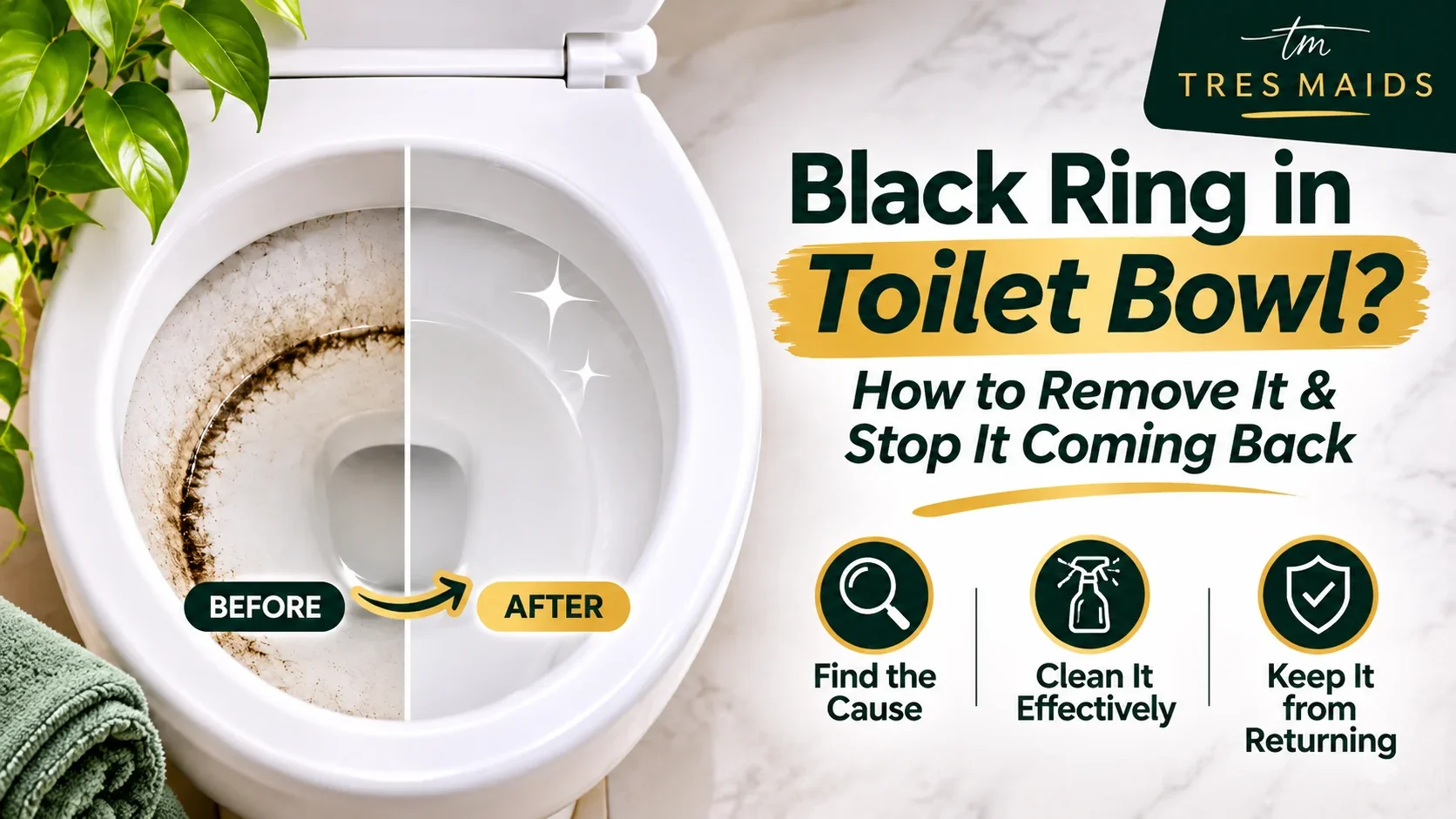
You scrub the toilet. The black ring disappears. A few days later, it's back—right at the waterline. Or maybe you've tried vinegar, baking soda, and three different brushes, and the ring still won't budge.
Here's the good news: a black ring in a toilet bowl doesn't always mean the toilet is dirty or that you need to replace it. The key is figuring out what you're cleaning. A hard mineral deposit needs a different approach from a soft, dark film.
Quick answer: Black toilet rings can come from mineral deposits (including manganese or iron), microbial buildup such as biofilm, or a combination. If the ring feels rough and won't scrub away, consider a toilet-safe mineral descaler. If it wipes away but returns quickly, focus on regular cleaning and checking for buildup under the rim or in the tank. Never mix bleach with vinegar, acids, or other cleaners.
Below, you'll find a free five-question troubleshooting tool, a step-by-step cleaning plan, and practical ways to keep the ring from returning.
What's Causing Your Black Toilet Ring? Try the Free Troubleshooter
Not every ring needs the same fix. Answer five quick questions to see which explanation is worth investigating first. This tool offers clues, not a laboratory diagnosis—more than one cause can be present.
Black Toilet Ring Troubleshooter
Five questions. Possible causes. A safer next step.
Question 1 of 5
Your troubleshooting guide
Here's what to check next
This tool cannot identify a specific organism or mineral. Always follow your toilet manufacturer's guidance and the cleaning product label. Never mix cleaning products.
Want to share this resource? Link directly to this article and tell readers to open the Black Toilet Ring Troubleshooter.
What Causes a Black Ring in a Toilet Bowl?
Think of the waterline as a place where water, air, and residue meet. Over time, material can collect there and leave a dark band. The color alone won't tell you exactly what it is.
1. Minerals in the water
Some water contains dissolved minerals that can leave deposits on bathroom fixtures. Manganese can produce dark brown or black staining; iron often creates reddish-brown marks. Hard-water scale can also create a rough surface where other residue collects.
If several toilets, sinks, or fixtures have similar stains, your water supply is worth investigating. But multiple stained toilets don't prove that manganese is the cause. A water test is more reliable than guessing by color.
2. Biofilm and other microbial buildup
Biofilm is a layer of microorganisms that can attach to wet surfaces. In a toilet, some buildup may look like a dark film and wipe away more easily than mineral scale. A dark ring is not proof of a particular type of mold or bacteria.
Moisture, residue, and time between cleanings can all influence how quickly buildup returns. You may notice it most in a bathroom that's rarely used or in a toilet with hard-to-reach deposits.
3. Both problems at once
This is an easy possibility to miss. A toilet can have a rough mineral ring and dark surface residue on top of it. You scrub off the dark layer, the bowl looks better, and then the dark ring returns because the underlying deposit is still there.
That is one reason a ring may seem impossible to fix with ordinary scrubbing alone.
How to Tell Whether It's Mineral Buildup or Surface Residue
Use these signs to decide what to investigate—not to make a definite diagnosis.
| What you notice | What it may suggest | Useful next step |
|---|---|---|
| Rough, gritty, or crusty ring | Mineral scale or a layered deposit | Check whether a toilet-compatible descaler is appropriate |
| Soft film that wipes away | Surface residue or microbial buildup | Clean thoroughly; monitor recurrence |
| Ring returns within days | Ongoing residue, water conditions, or buildup left behind | Inspect the rim, tank, and cleaning routine |
| Similar stains on several fixtures | Shared water-quality factor is possible | Consider water testing |
| Thick ring in an unused toilet | Long-standing deposits or residue | Start gently; avoid aggressive scraping |
A simple check: After cleaning with one suitable product and rinsing as directed, look closely at the waterline. Does it still feel raised or rough? If so, the dark color may be gone while the deposit remains. Don't use bare fingers to touch contaminated surfaces; use gloves and a suitable cleaning tool.
How to Remove a Black Ring From Your Toilet Bowl
You don't need to start with the harshest product on the shelf. Start with a method that matches the problem, and move to a different approach only after you've safely finished and rinsed the first one.
Step 1: Gather your supplies
- Cleaning gloves and a toilet brush with non-damaging bristles
- A toilet bowl cleaner suitable for your toilet's finish
- For suspected scale: a toilet-compatible descaling product, if approved by the manufacturer
- Eye protection if required by the cleaner's label
- Good ventilation and access to the product instructions
Step 2: Clean away ordinary residue
Flush first if needed. Apply a single toilet bowl cleaner as directed on its label, including the specified amount and contact time. Scrub gently under the rim and around the waterline, then flush or rinse as instructed.
If the ring disappears and the surface feels smooth, you may only need a more consistent maintenance routine. If a rough outline remains, don't assume you need a harder brush.
Step 3: Treat suspected mineral scale with the right product
Choose a cleaner specifically labeled for toilet bowls and mineral or limescale deposits, and check your toilet manufacturer's care guidance. Use only the amount and contact time on the label. Let the cleaner do its intended work, then brush gently and rinse as directed.
Never pour an acidic descaler into a toilet that still contains bleach or another cleaning product. If you cannot establish that the previous product has been fully removed, stop and follow the manufacturers' instructions rather than improvising.
Step 4: Check your result
Look at the ring in good light. If the dark stain is gone but the waterline is still rough, you may be dealing with remaining scale. If the stain stays despite correct use of a suitable product, the surface may be worn, or the deposit may need a professional assessment.
Step 5: Keep the surface intact
Don't scrape the bowl with metal tools, sandpaper, or drill attachments. A damaged glaze can become harder to keep clean. If you're unsure what the toilet is made of or which products it permits, consult the manufacturer before trying anything abrasive.
Which Cleaning Method Works Best for a Black Toilet Ring?
There's no universal winner. The right product depends on whether you're removing ordinary residue, mineral deposits, or buildup that needs disinfection.
| Method | Best use | What to know |
|---|---|---|
| Regular toilet bowl cleaner + brush | Routine dirt and surface residue | May leave hard scale behind |
| Toilet-safe descaler | Suspected limescale or mineral deposits | Use only if compatible; follow label contact time |
| White vinegar, used alone | Some light mineral deposits | Often too mild for heavy scale; never combine with bleach |
| Labeled disinfecting cleaner | Disinfection when needed | Follow required contact time; doesn't necessarily dissolve scale |
| Pumice or abrasive stick | Some stubborn deposits on certain approved surfaces | Can scratch or wear glaze; not a universal safe choice |
| Baking soda mixed with vinegar | Not a preferred scale-removal method | They neutralize one another, reducing the acid's action |
Why baking soda and vinegar may disappoint
Vinegar is acidic. Baking soda is alkaline. When you mix them, they fizz because they react and release carbon dioxide gas. The bubbles look busy, but they don't mean the mixture is dissolving a stubborn mineral ring.
For mineral scale, an appropriate acidic product used by itself may be more useful than the fizzy combination. Always check surface compatibility and never mix household cleaning products.
Can a pumice stone scratch a toilet?
Yes, it can. Some people successfully remove toilet scale with a wet pumice stone, but wetting it doesn't guarantee that the finish will be safe. Glazes, coatings, and abrasive materials vary. Even small scratches can make future staining more noticeable.
Before using pumice, check the toilet manufacturer's instructions. If abrasive cleaning isn't explicitly permitted, choose a nonabrasive alternative or seek professional guidance. Avoid sandpaper, metal scraping tools, and aggressive power brushes.
What if the Black Ring Has Been There for Months or Years?
Maybe you just moved into a house, opened a guest bathroom that hasn't been used in months, or inherited a toilet with a thick ring at the waterline. These stains can be more than a thin surface film.
For an old, crusty ring, start with the same gentle cleaning process. If rough scale remains, try a manufacturer-compatible mineral-removal product according to its instructions. Reassess after the recommended treatment rather than increasing the chemical concentration or soaking for hours beyond the label.
If repeated label-compliant treatment doesn't help, stop. Persistent deposits may require a professional cleaner's assessment, and a worn or damaged toilet finish may not return to its original appearance.
Important: Do not use concentrated muriatic or hydrofluoric acid, drain opener, patio cleaner, or homemade mixtures in the toilet. Those recommendations sometimes appear in online discussions, but they can pose serious injury and material-damage risks.
Why Does the Black Toilet Ring Keep Coming Back?
Removing a stain and preventing it are two different jobs. If the ring returns within days, the cause may still be present—even when the bowl looked clean right after scrubbing.
Check under the rim and look inside the tank
With gloves and good lighting, inspect under the rim where flush water enters the bowl. You may find residue that ordinary brushing misses. If it's safe to do so, lift the tank lid carefully and look for visible deposits or discoloration. Don't pour cleaners into the tank unless your toilet manufacturer explicitly approves them; some in-tank products can damage seals and components.
If the tank has substantial buildup, recurring debris, or a plumbing problem, contact a qualified professional. A cleaning service cannot repair faulty flush components or plumbing.
Pay attention to patterns
Does the ring show up only in the guest bathroom? After a vacation? In every toilet? These clues help you choose your next step, but none proves a particular cause. Note how quickly the ring returns after a thorough cleaning and whether other fixtures show stains.
Use a simple prevention routine
- Clean the bowl regularly. Weekly is a reasonable starting point for many households; adjust based on actual buildup.
- Brush under the rim. It's easy to miss during a quick clean.
- Flush and check rarely used toilets periodically. Don't leave visible buildup for months.
- Keep bathroom ventilation working. Moisture control helps the room overall, though it won't remove dissolved minerals from water.
- Address recurring scale. If hard deposits remain, routine surface cleaning may not solve the problem.
- Investigate water quality when appropriate. Especially if multiple fixtures have persistent staining.
Save this quick checklist
After your next toilet cleaning: Check the waterline for roughness, inspect under the rim, note the cleaning date, and look again in a week. If the ring returns, you'll have useful information instead of starting from scratch.
When Should You Test Your Water or Get Professional Help?
If black or brown staining appears across several fixtures, consider checking your water utility's water-quality information or arranging appropriate testing, especially if you use a private well. Manganese and iron are possible contributors, but a photo or stain color can't confirm what's in the water.
If you notice leaks, poor flushing, unusual tank debris, or repeated plumbing issues, a plumber is the better choice. For substantial mold growth beyond ordinary surface cleaning, follow appropriate mold guidance or consult a qualified remediation professional.
When a cleaning service makes sense
Sometimes the bigger issue isn't one toilet ring. It's the bathroom grout, shower buildup, sink, floors, and the time it takes to keep everything clean. If you'd rather have help with the routine, Tres Maids offers recurring house cleaning in Westchester County, deep cleaning, and one-time cleaning.
Professional cleaning can help with accessible household buildup, but results depend on the material and condition of the surface. Cleaning is not a substitute for water treatment, plumbing repairs, or mold remediation.
For more bathroom help, see our guides to cleaning bathroom grout, removing shower soap scum, and finding the source of bathroom urine odors.
Frequently Asked Questions About Black Toilet Rings
Does a black ring in the toilet mean someone has diabetes?
No. A black toilet ring cannot diagnose diabetes. Glucose can appear in urine in certain circumstances, including uncontrolled diabetes and use of some medications, but toilet stains have many other possible causes. If you're concerned about diabetes—especially with symptoms such as unusual thirst or frequent urination—ask a healthcare professional about appropriate testing, such as an A1C or blood glucose test.
Is the black ring mold or manganese?
It could involve mineral staining, microbial buildup, or both. Texture and patterns offer clues, but appearance alone cannot reliably distinguish mold, manganese, or other substances. Water testing can help investigate suspected mineral issues.
Why does my toilet get a black ring so fast?
Possible reasons include ongoing residue, microbial growth, mineral deposits that weren't fully removed, and water conditions. Check whether the surface remains rough after cleaning and whether similar stains occur in other fixtures.
Will bleach remove a black toilet ring?
A bleach-based product may address certain stains or disinfect when used exactly as labeled, but bleach does not reliably dissolve hard mineral scale. Never combine bleach with acidic toilet cleaners, vinegar, ammonia, or other cleaning products.
Can I leave CLR or another descaler in the toilet overnight?
Don't assume overnight soaking is safe. Products differ in their approved uses and contact times. Check that the specific product is labeled for your toilet and follow its instructions. Longer is not automatically better.
Will a pumice stone damage the porcelain?
It can. Some abrasive tools remove deposits but may also scratch or dull certain finishes. Follow your toilet manufacturer's care instructions and avoid pumice if its use isn't approved for that surface.
Are toilet bowl cleaners safe for septic systems?
Choose products whose labels say they're appropriate for your system, use the directed amount, and follow any guidance from your septic professional. Don't assume every cleaner or frequent heavy chemical use is compatible.
Why does a black ring appear in a toilet nobody uses?
Water can sit for long periods while deposits or residue remain on the surface. A rarely used toilet can still develop stains, so the presence of a ring doesn't prove anything about the health of its users.
Should I replace a toilet with a permanent black ring?
Not automatically. First determine whether the issue is removable buildup. If the glaze is worn, scratched, or permanently stained, cleaning may have limits. A plumber or toilet manufacturer can advise on replacement when appropriate.
The Bottom Line: Treat the Cause, Not Just the Color
A black ring in your toilet bowl can be frustrating, especially when it returns right after you clean. But you don't have to guess—or reach for the strongest chemical you can find.
Start by checking whether the ring is rough or easy to wipe away. Use a cleaner suited to the likely buildup, follow the label, protect the toilet's finish, and watch for patterns that point to water quality or hidden residue.
And if keeping up with the whole bathroom is taking more time than you'd like, it's okay to get help.
Spend Less Time Scrubbing. Enjoy More of Your Home.
Tres Maids helps Westchester homeowners keep their homes feeling clean and comfortable. See what professional house cleaning could cost for your home.
See My Cleaning PriceNo payment required to see your estimate.
Sources and Further Reading
These resources are provided to help you check cleaning safety, water quality, and medical questions. Product instructions and your toilet manufacturer's guidance should always take priority for your specific fixtures.
- CDC — Cleaning and Disinfecting: general cleaning and disinfectant safety guidance.
- EPA — Secondary Drinking Water Standards: information on aesthetic water-quality issues, including iron and manganese.
- EPA — Private Drinking Water Wells: guidance for homeowners investigating well-water quality.
- NIDDK — Diabetes Tests & Diagnosis: clinical testing rather than interpreting household stains.
- EPA — Mold: moisture and mold guidance for the home.