

You open your dishwasher expecting clean dishes. Instead, you get a sour smell, cloudy glasses, or a greasy film on the inside. So you run another cycle. And somehow, the problem is still there.
Here's the good news: you can often fix the problem with a little hands-on cleaning. The trick is knowing where the grime hides—and using the right method for what you're seeing.
Quick answer
To clean a dishwasher, remove food debris, wash the removable filter, wipe the door seals and interior, check accessible spray-arm holes, then run an empty cleaning cycle using a product approved for your model.
Always check your owner's manual before removing parts or using vinegar, citric acid, or another cleaner. A cleaning cycle alone won't remove every bit of stuck-on grease.
First, find out what your dishwasher needs
Not every dishwasher problem has the same fix. White, chalky marks can point to mineral buildup. A slippery film is more likely to call for hands-on cleaning. A rotten smell that keeps returning may involve trapped food—or a drainage issue.
| What you notice | What may be happening | What to try first |
|---|---|---|
| Greasy or slimy walls | Food oils and detergent residue | Wipe accessible surfaces, then use an approved dishwasher cleaner |
| Bad smell when you open the door | Debris in the filter, seals, or lower door edge | Clean those spots by hand before running a cycle |
| White, chalky film | Hard-water minerals or detergent residue | Check your manual and consider a dishwasher-safe descaler |
| Food left on dishes | Dirty filter, blocked spray holes, or loading problems | Check the filter, spray arms, and rack loading |
| Water left across the tub floor | Possible drainage problem | Follow your model's drain troubleshooting instructions |
| Smell returns within days | Hidden residue or a drain/backflow problem | Use the persistent-odor checklist |
One important detail: a little water down inside the recessed area beneath some filters can be normal. Water covering the dishwasher floor after a finished cycle is different. Your owner's manual is the best guide to what's expected for your model.
Dishwasher problem solver: what should you clean first?
Start with what you can see or smell. Choose the closest match below for a quick, practical next step. These are clues, not a diagnosis.
It smells sour or rotten
The inside feels greasy or sticky
There's white, chalky buildup
Dishes still have food stuck on them
Water is pooling on the tub floor
Tip: If more than one symptom applies, begin with the filter and visible residue. If there's unusual water pooling, leakage, or an electrical concern, prioritize safety and appliance troubleshooting.
What you'll need to clean your dishwasher
- Microfiber cloth or soft, non-scratch sponge
- Soft toothbrush or small soft-bristled brush
- Warm water and a bowl
- A small amount of mild dish soap for washing removable parts or wiping surfaces when permitted
- A dishwasher cleaner or descaler approved for your model, if needed
- Your dishwasher owner's manual
Before you start: let the machine cool. Don't reach into a running dishwasher. Watch for broken glass near the filter. If your manual calls for switching off power before a maintenance task, follow that instruction. Never pour ordinary hand dish soap into the dishwasher detergent dispenser—it can produce excessive suds.
How to clean a dishwasher in 5 easy steps
Step 1: Empty the dishwasher and remove loose food
Take out the dishes and slide out the bottom rack. Look along the tub floor and around the filter for scraps, labels, seeds, or other visible debris. Remove only what you can reach safely.
It's tempting to start by pouring in a cleaner. But if a piece of food is stuck in the filter, a hot cycle may not remove it. Clear the obvious mess first.
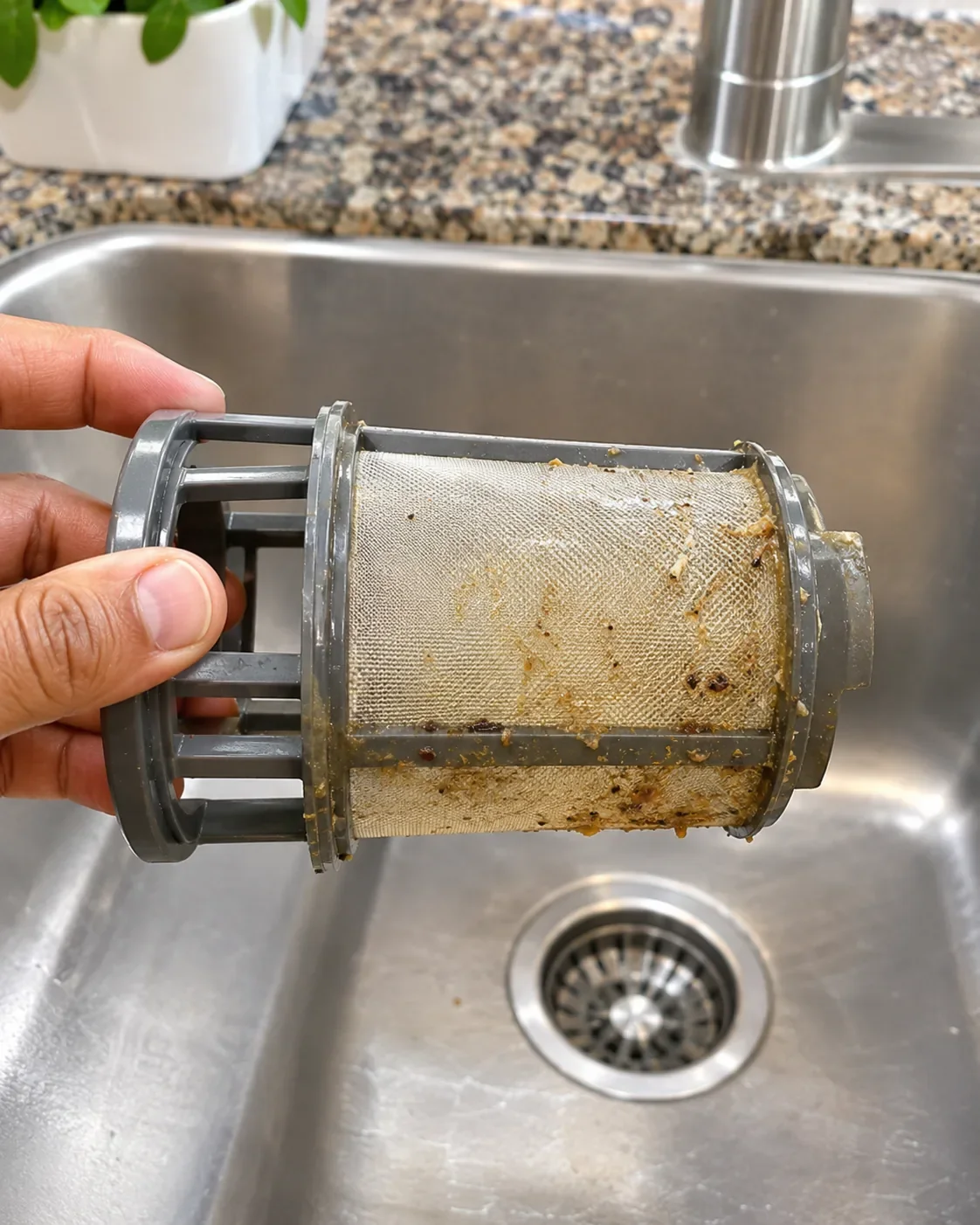
Step 2: Clean the dishwasher filter
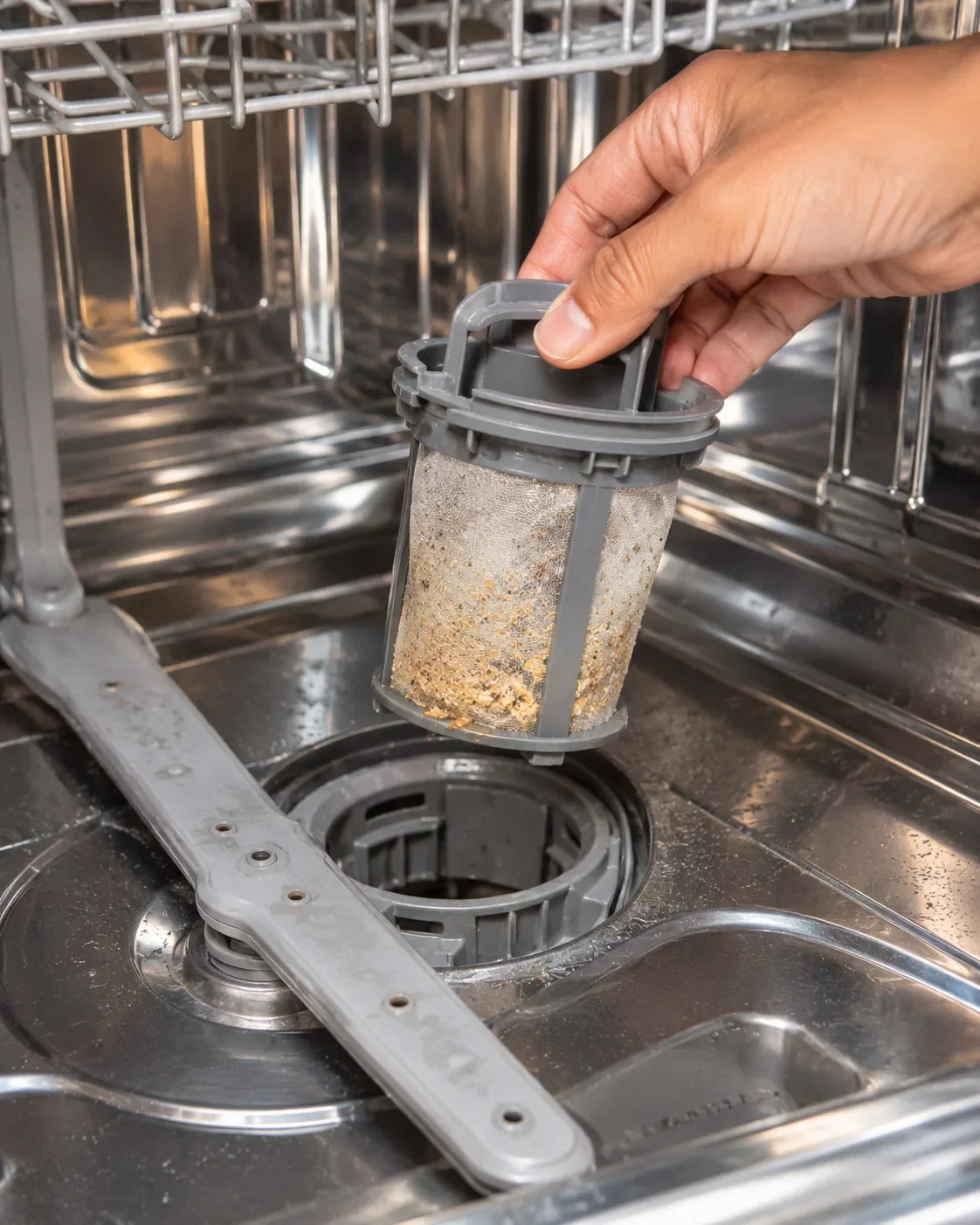
On many models, the filter sits beneath the lower rack near the bottom spray arm. Check your manual for the exact location and removal method.
- Remove the lower rack.
- Unlock and lift out the filter only as your manual directs.
- Rinse away loose food under warm running water.
- Use a soft brush to loosen grease and debris. Bosch and LG describe gentle filter cleaning with water and soft tools; Bosch also mentions mild soap.
- Rinse well, reinstall every removable piece, and lock the filter securely into place.
Don't pry apart a filter that isn't designed to come apart. A filter that's loose or installed incorrectly can affect cleaning performance.
For a manufacturer example, see Bosch Owner Support and look for its dishwasher-filter cleaning guide. For LG models, consult LG Support and your model manual.
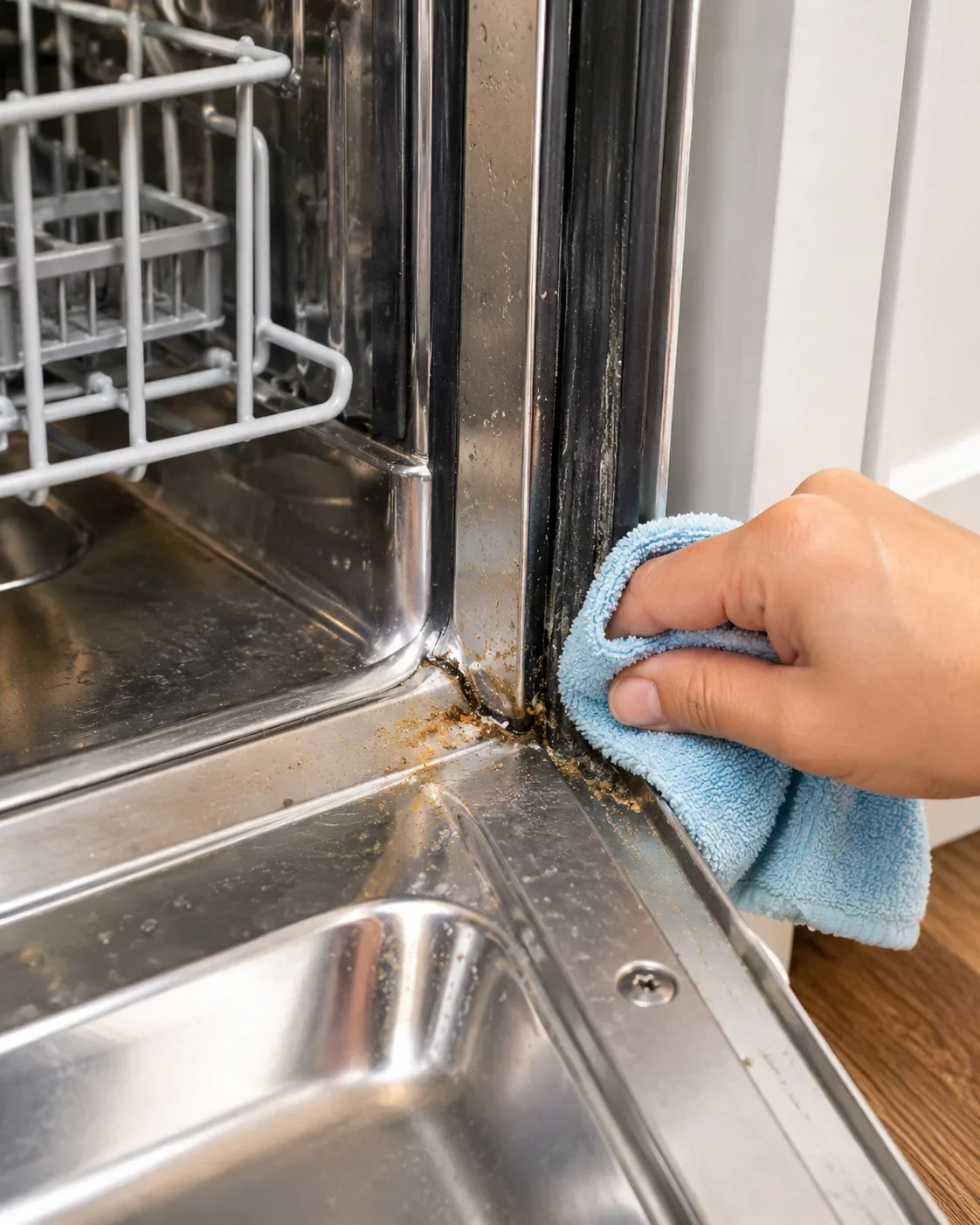
Step 3: Wipe the door seals, edges, and interior by hand
This is the step many quick guides skip.
Open the door and look closely at the rubber gasket, corners, and bottom edge. These spots may collect a sticky mix of grease and food even when the stainless-steel walls look clean.
Start with a damp microfiber cloth. For stubborn grease, use a small amount of mild soap in warm water if your manufacturer permits it. Wipe the area gently, then go over it again with a clean, damp cloth until no soap remains.
Use a soft toothbrush for accessible folds and crevices. Avoid soaking seals, using abrasive pads, or forcing tools behind panels. Don't spray cleaning liquid into controls, vents, or electrical openings.
What about the walls? Wipe visible greasy areas with a soft cloth. A manufacturer-approved dishwasher cleaner can help with residue in areas that a cloth can't reach, but it doesn't replace scrubbing stuck-on grime.
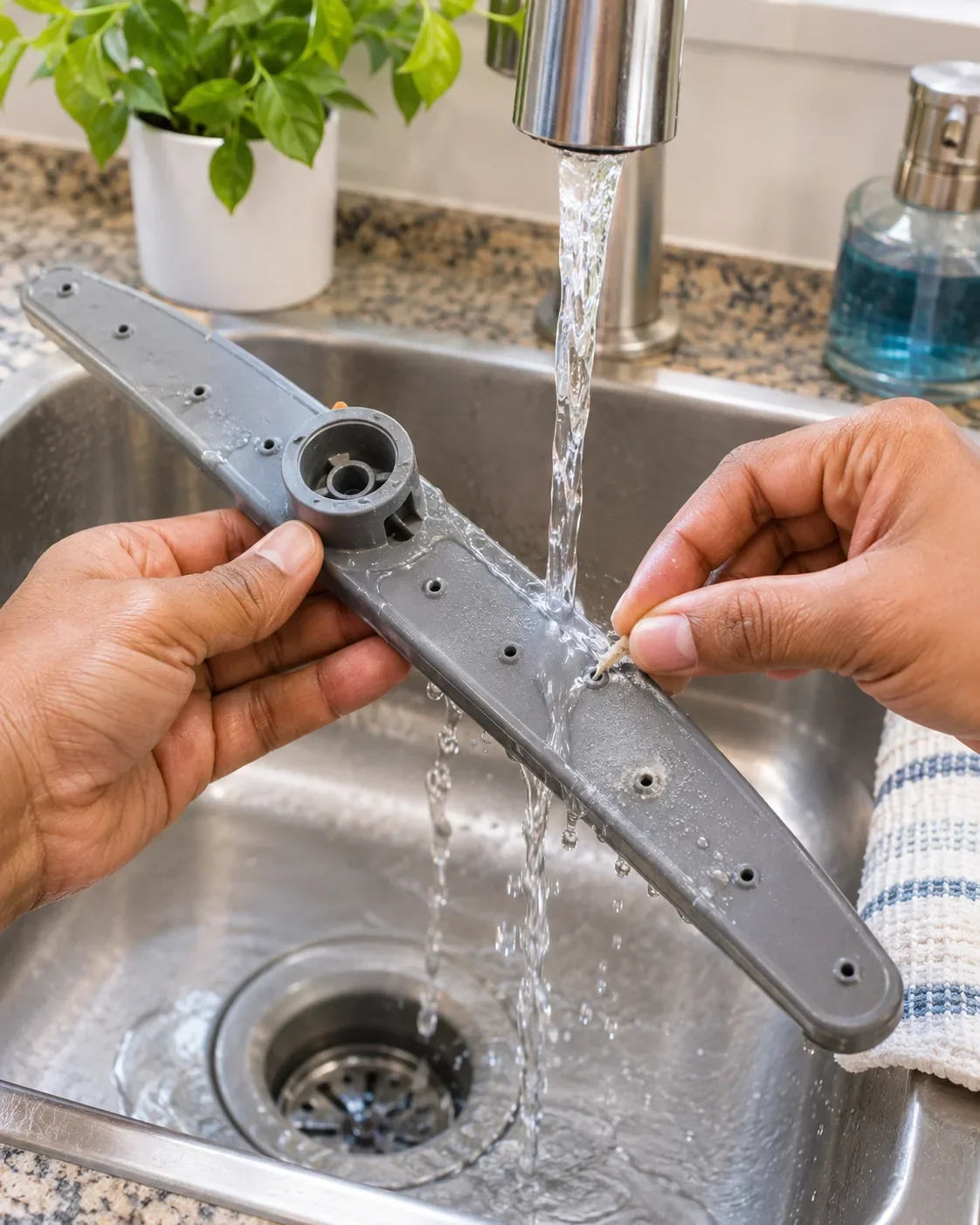
Step 4: Check the spray arms and water jets
Spray arms spin to move wash water around your dishes. If their holes are blocked by food or mineral deposits, cleaning performance may suffer.
Look for visible blockages and make sure the arms can move freely when the dishwasher is off. If your manual allows you to remove an arm, rinse it and clear accessible holes using the recommended method. Reinstall it correctly before running the dishwasher.
Don't force an arm off. Some models use clips or fittings that are easy to damage. Avoid pushing debris deeper into the nozzles with sharp metal tools.
Step 5: Run an empty cleaning cycle
Once the filter and accessible surfaces are clean, use the dishwasher's cleaning or maintenance cycle if it has one. Otherwise, follow the cycle instructions supplied with a cleaner that is approved for your model.
Choose the cleaner based on the problem. Dishwasher cleaners may target grease and residue; descalers are made for mineral deposits. Follow the product label and appliance manual for where to place the cleaner and which cycle to use.
When the cycle finishes, check that the odor or film has improved and that the machine drains as expected. If it doesn't, don't keep repeating stronger chemical treatments. Move to the troubleshooting steps below.
Grease, hard-water scale, or detergent film? How to tell the difference
A white mark and a greasy smear may look like the same cleaning problem from a distance. But using the wrong product can waste time. Check a small, accessible area before treating the whole machine.
| What it looks or feels like | Possible cause | Best first move |
|---|---|---|
| Brown or yellow, slick to the touch | Food grease and residue | Wipe accessible surfaces with a soft cloth; use a model-approved cleaner for lingering grease |
| White, rough, chalky crust | Hard-water mineral scale | Check the manual for a compatible descaler and follow the product label |
| White, cloudy or slippery film | Detergent residue or water-quality issues | Review detergent amount, rinse aid and water conditions; don't assume descaling is the answer |
| Dark specks or fuzzy-looking spots | Food debris, staining, or possible microbial growth | Wipe accessible areas safely; if growth is extensive or returns, seek model-specific guidance or professional help |
Don't identify mold by color alone. A dark stain is not proof of mold, and cleaning visible residue does not necessarily solve a moisture or drainage problem.
What should you use to clean a dishwasher?
Vinegar, baking soda, citric acid, and commercial cleaners all appear in online advice. But they aren't interchangeable, and none should be treated as safe for every machine.
| Cleaning method | Best use | Important caution |
|---|---|---|
| Soft cloth + water | Routine wiping of accessible surfaces | Don't flood controls or hidden openings |
| Mild soap + soft brush | Removable filters and permitted manual cleaning | Rinse away all soap; never add hand soap to a machine cycle |
| Dishwasher cleaner | Grease, film, and maintenance cleaning | Use a dishwasher-labeled product according to directions |
| Dishwasher descaler | Hard-water mineral deposits | Use only when compatible with the appliance |
| Plain white vinegar | Some manufacturer-approved maintenance methods | Not universally recommended; frequent use may harm some parts |
| Baking soda or citric acid | Only where the model's guidance permits | Don't improvise amounts or mix with other cleaners |
Our simple recommendation: if you're unsure which chemical is safe, use a soft cloth for accessible grime and choose a dishwasher-specific product approved by your manufacturer. Never mix cleaning chemicals. In particular, never combine bleach with vinegar, acids, or ammonia.
Why does my dishwasher still smell after cleaning?
Imagine this: you scrub the filter, run an empty cycle, and the dishwasher smells fresh. Two days later, the sour smell is back. Frustrating, right?
That can happen because the cleaner addressed the smell for a short time without removing its source. Here's how to narrow it down.
1. The bottom of the door is still dirty
Feel for visible, accessible buildup along the lower door edge and gasket. Food and grease can hide there even when the filter looks spotless. Wipe those areas gently with a damp cloth, using a soft brush where appropriate.
2. The filter looks clean but has trapped residue
Check all the filter surfaces your manual says you can clean. Rinse thoroughly and inspect the mesh for stuck debris. Don't separate sealed layers or pry components apart.
3. Dirty water may be returning through the drain
If the odor comes back quickly, especially along with dirty water or poor draining, the issue may involve the drain hose, garbage disposal connection, check valve, or an installation problem.
Some installations require a high drain-hose loop or an air gap to help prevent backflow. The correct setup depends on your model and local plumbing requirements. Check the installation manual or ask a qualified appliance technician or plumber to inspect it. Don't alter the drain hose based on a forum comment.
4. The residue isn't just food
White deposits can point to hard water. A greasy film may require a different product. If the dishwasher is clean but dishes still smell, also consider detergent use, water quality, and whether the machine is washing and draining properly.
5. The problem needs repair, not more cleaner
Repeated drainage errors, leaks, water covering the tub floor, unusual noises, or a strong smell that persists despite proper cleaning are reasons to consult your manual and seek appliance service.
Don't confuse cleaning with repair. A home-cleaning service can help with household cleaning tasks, but dishwasher pump, electrical, plumbing, and internal drainage repairs belong with qualified appliance or plumbing professionals.
Your dishwasher cleaning and maintenance checklist
You don't need to deep-clean your dishwasher every time you run it. Small habits can help keep grime from becoming a bigger job.
Save this dishwasher checklist
Tick items as you go. You can print this page and keep the checklist near your kitchen cleaning supplies.
How often? LG's filter guidance suggests monthly cleaning; GE's maintenance article describes filter care every few months. The right interval depends on your model, how often you use it, and how much debris it collects. Check your manual, and clean sooner if you notice odors or poor washing.
Free printable dishwasher cleaning checklist
Want a quick reminder you can keep near the kitchen? Download our one-page dishwasher cleaning checklist. It covers the five cleaning steps, how to choose a cleaner, and what to check if odors return.
Download the free dishwasher cleaning checklist (PDF)
Publishing step: Upload the PDF to Squarespace, then replace REPLACE_WITH_SQUARESPACE_PDF_URL in this article with its actual hosted file URL. The button will not work until that is done.
How often should you clean your dishwasher?
There's no single schedule for every household. A dishwasher used twice a day may need attention sooner than one used a few times a week. Your manual's schedule comes first.
| When | What to check |
|---|---|
| After messy loads | Remove visible scraps, labels, and debris you can safely reach |
| About once a month | Inspect the removable filter, door edges, and seals; clean as needed or as your manual directs |
| When dishes wash poorly | Check filter seating, spray-arm movement, loading, and visible nozzle blockage |
| When you see scale or film | Identify the residue first; use a compatible cleaner or descaler only if needed |
| Whenever odors return | Recheck hidden food residue and look for drain symptoms rather than repeating chemicals |
This is a practical inspection routine, not a universal manufacturer requirement. Some brands recommend monthly filter care; others vary by model and usage.
Five dishwasher-cleaning mistakes to avoid
- Running a cleaner without checking the filter. A cycle may not remove trapped scraps.
- Using the same chemical for every problem. Grease and hard-water scale aren't the same thing.
- Leaving hand dish soap behind. Too much residue can create suds during the next cycle.
- Forcing parts apart. Filters, spray arms, and panels vary by model.
- Ignoring a smell that keeps returning. Persistent odors can signal a drainage or installation issue.
Frequently asked questions
Can I clean my dishwasher with vinegar?
Only if your dishwasher manufacturer approves it for your model. Some manufacturers describe vinegar-cleaning methods, but others caution against frequent use because acids can affect components. Follow your manual rather than a one-size-fits-all recipe.
How do I deep-clean a dishwasher without vinegar?
Clean the removable filter, wipe accessible interior surfaces and seals, inspect the spray arms, then run an empty cycle with a manufacturer-approved dishwasher cleaner. Use an approved descaler if hard-water buildup is the issue.
Can I scrub the inside of my dishwasher with dish soap?
Some manufacturers permit mild soap for removable filters, and certain surfaces can be wiped with a very small amount when the manual allows it. Rinse all residue away with a damp cloth. Never use ordinary hand dish soap as dishwasher detergent or leave a soapy film behind.
How do I clean a smelly dishwasher?
Start with the filter, lower door edge, and gasket. Then inspect accessible spray arms and run an approved maintenance cycle. If the smell returns, check for drainage symptoms and consult an appliance professional when needed.
Is standing water under the dishwasher filter normal?
A small amount of water in the recessed sump can be normal on some models. Water covering the dishwasher floor after a completed cycle, especially with an error message or foul odor, deserves further investigation. Check your model's guidance.
How often should I clean the dishwasher filter?
Follow your owner's manual. Monthly cleaning is a useful reminder for many households, but the recommended interval varies by manufacturer, model, and usage.
Do I need to rinse dishes before putting them in the dishwasher?
Scrape off large food scraps. Many modern dishwashers don't require full pre-rinsing, though instructions vary. Check your manual and avoid blocking the spray arms when loading.
Can a cleaning cycle fix a dishwasher that won't drain?
Not reliably. A clogged filter may contribute to poor draining, but a blocked hose, failed component, or installation issue needs its own diagnosis. Follow the manufacturer's troubleshooting steps or contact a qualified technician.
A cleaner dishwasher starts with the spots you can actually reach
The best place to start isn't a stronger chemical. It's the filter, door edges, seals, and visible grime. Once those are clean, the right maintenance cycle can do the rest of the job it's designed to do.
And if the smell keeps coming back, you now know what to check next—without wasting time on the same fix over and over.
A clean kitchen feels better when you don't have to spend your whole weekend working on it. If the rest of your home could use that same fresh start, explore what a professional deep cleaning includes or learn about Tres Maids deep cleaning in Westchester County. Appliance disassembly, internal dishwasher cleaning, and repairs are not implied by these services; confirm the service scope before booking.
Spend less time cleaning. Enjoy more time at home.
See a personalized estimate for your home with Tres Maids.
See My Cleaning PriceNo payment required to see your estimate.
More helpful cleaning guides
Keeping your kitchen appliances fresh? Our step-by-step washing machine cleaning guide covers another appliance that can develop odors and buildup.
About this guide: This is an editorial homeowner checklist based on general appliance-care principles and manufacturer support guidance. It does not report laboratory testing, verified results from a particular dishwasher model, or appliance repair services performed by Tres Maids.
Manufacturer references and further reading
Always prioritize the instructions for your dishwasher's exact model. These manufacturer support resources are a starting point:
- Bosch Owner Support — filter care and model manuals.
- LG Support — filter maintenance and product manuals.
- GE Appliances — appliance maintenance and factory service resources.
- Whirlpool — dishwasher care guidance and model-specific instructions.
Manufacturer guidance varies by model and region. These are official brand support portals, not citations to a specific model's instructions. Find your model number and consult its manual before removing parts or using a chemical cleaner. This guide covers routine homeowner cleaning, not appliance repair.